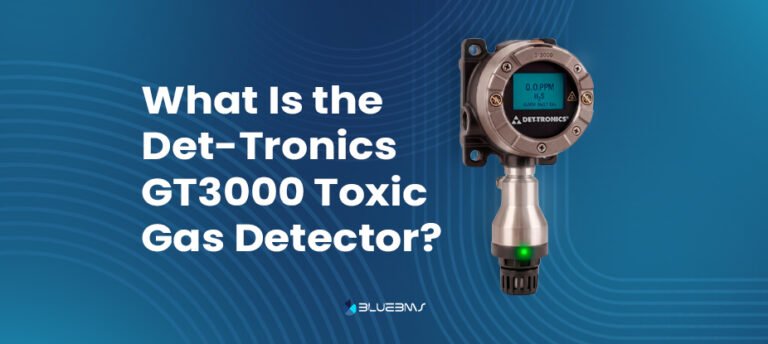
Model Reference
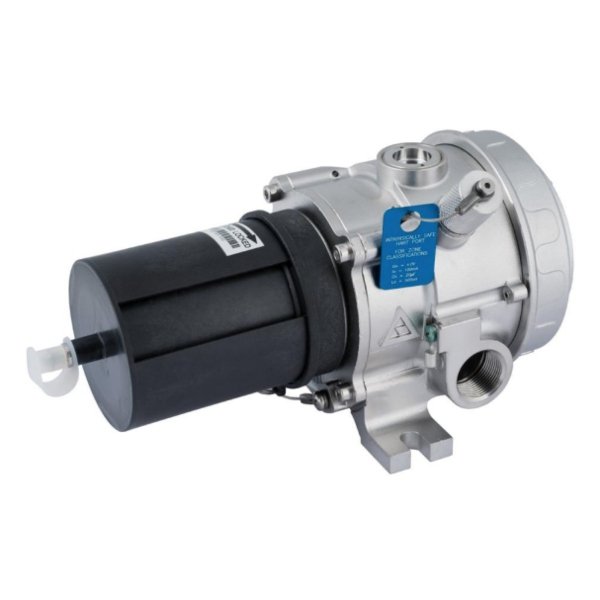
Det-Tronics 014048-245-LG · PIRECLB11D1T2
Fast Response · Hydrophobic Weather Protection · Light Gray Housing · SIL 2 Certified
What Is the Det-Tronics PointWatch Eclipse® PIRECL Infrared Hydrocarbon Gas Detector?
When a gas leak occurs in a compressor room, on an offshore production platform, or inside a petrochemical processing unit, the margin between early detection and catastrophe is measured in seconds. The Det-Tronics PointWatch Eclipse® Model PIRECL is the infrared hydrocarbon gas detector engineered specifically for those seconds — delivering continuous, fixed monitoring of flammable hydrocarbon gases from 0 to 100% Lower Flammable Limit (LFL) with no sensor poisoning risk and no routine calibration required.
Part number 014048-245-LG identifies a specific factory configuration of this infrared hydrocarbon gas detector: Fast Response (FR) mode, hydrophobic weather protection baffle, and light gray housing. This is the variant most frequently specified on projects in the oil & gas, offshore, and industrial sectors where speed of response and environmental robustness are non-negotiable. Manufactured by Det-Tronics — a globally recognized leader in infrared gas detection and fire safety — the PIRECL is performance-certified to methane, propane, ethylene, and butane, and is capable of detecting hundreds of additional flammable hydrocarbon vapors.
Quick Answer for Specifiers
The Det-Tronics 014048-245-LG is the Fast Response variant of the PIRECL infrared hydrocarbon gas detector, equipped with a hydrophobic filter baffle for reliable performance in rain, condensation, and high-humidity environments. It is SIL 2 certified per IEC 61508 and holds FM, CSA, ATEX, IECEx, DNV, and INMETRO certifications — covering every major oil & gas market globally.
Why an Infrared Hydrocarbon Gas Detector Outperforms Catalytic Bead Technology
Not all gas detectors are created equal. Traditional electrochemical and catalytic bead sensors have a fundamental vulnerability: they depend on a chemical reaction to detect gas, which means they can be permanently disabled by sensor poisons such as silicone compounds, hydrogen sulfide (H₂S), or tetraethyl lead. Worse, they can fail silently at high gas concentrations — the exact moment reliable detection is most critical. Understanding how fire and gas detection systems work makes clear why the infrared hydrocarbon gas detector has become the standard technology for high-consequence industrial environments.
The PIRECL uses Non-Dispersive Infrared (NDIR) technology with heated sapphire optics to measure the absorption of hydrocarbon gas molecules at specific IR wavelengths. Because this infrared hydrocarbon gas detector operates optically rather than chemically, it is entirely immune to the failure modes that affect catalytic bead sensors. Key advantages include:
No Sensor Poisoning
Immune to silicones, H₂S, and high gas concentrations that permanently destroy catalytic bead sensors.
No Routine Calibration
Heated sapphire optics deliver long-term stability, reducing both downtime and total lifecycle cost significantly.
Fast Response
T50 in as little as 1.0 second (methane, FR mode, per EN 60079-29-1).
Continuous Self-Diagnostics
All critical tests performed once per second. No undisclosed failure modes — full transparency of device health at all times.
In industries where a single undetected gas release can result in catastrophic loss of life or assets — oil & gas, offshore platforms, petrochemical refineries, data centers, and LNG terminals — the infrared hydrocarbon gas detector is the accepted best practice and increasingly the regulatory expectation.
Det-Tronics 014048-245-LG: Key Specifications at a Glance
The table below summarizes the core technical parameters of this infrared hydrocarbon gas detector configuration. All data is sourced from the official Det-Tronics specification sheet 90-1138.
| Parameter | Value |
|---|---|
| Model / Part Number | PIRECLB11D1T2 / 014048-245-LG |
| Detection Principle | Non-Dispersive Infrared (NDIR) |
| Detection Range | 0–100% LFL (configurable) |
| Input Voltage | 24 Vdc nominal (18–32 Vdc) |
| Power Consumption | 4.0 W nominal @ 24 Vdc |
| Signal Output | Isolated 4–20 mA + HART + RS-485 (Modbus/ASCII) |
| Response Variant | Fast Response (FR) |
| T50 (FR, without filter) | 1.0 second |
| T90 (FR, without filter) | 1.5 seconds |
| Weather Protection | Hydrophobic filter baffle (tethered, twist-lock) |
| Housing Color | Light Gray (LG) |
| Housing Material | Stainless Steel 316 / CF8M Cast |
| IP Rating | IP66 / IP67 |
| Operating Temperature | –55°C to +75°C (–67°F to +167°F) |
| Accuracy | ±3% (0–50% LFL) / ±5% (51–100% LFL) |
| SIL Rating | SIL 2 (IEC 61508, certified by exida®) |
| Certifications | FM, CSA, ATEX, IECEx, DNV/MED, INMETRO |
| Hazardous Area | Class I, Div. 1 & 2, Groups B, C & D; Zones 1 & 2 |
| Dimensions (L × W × H) | 9.3 × 5.2 × 4.6 in (23.6 × 13.2 × 11.7 cm) |
| Shipping Weight | 10.5 lbs (4.8 kg) |
The 014048-245-LG Configuration: Fast Response + Hydrophobic Protection
The PIRECL platform offers multiple configuration variants. The 014048-245-LG infrared hydrocarbon gas detector is defined by two features that together address the two most common specification challenges in outdoor and offshore gas detection: response speed and weather resilience.
1. Fast Response (FR) Mode
In environments where the speed of alarm actuation directly determines whether an emergency shutdown (ESD) can be initiated before a gas cloud reaches ignition energy, response time is not a specification detail — it is a life safety parameter. Every second of detection delay is a second during which a flammable mixture continues to grow. The FR variant of this infrared hydrocarbon gas detector achieves:
| Metric | Without Filter | With Hydrophobic Filter |
|---|---|---|
| T20 | < 1 second | < 1 second |
| T50 | 1.0 s | 1.2 s |
| T90 | 1.5 s | 2.6 s |
Testing based on EN 60079-29-1 with methane applied. FR values based on 50% LFL; STD values based on 100% LFL.
To put these numbers in context: a Standard Response PIRECL takes 4.5 seconds to reach 50% alarm threshold under the same conditions. The Fast Response infrared hydrocarbon gas detector does it in 1.0 second — more than four times faster. In compressor rooms, wellheads, and open offshore deck areas where gas cloud formation can be rapid, this difference is operationally critical.
2. Hydrophobic Weather Protection Baffle
Outdoor and offshore environments introduce a challenge that indoor gas detectors never face: water ingress into the optical path. Rain, condensation, salt spray, and high-pressure wash-down procedures can all obscure a detector’s optics, triggering nuisance faults or masking genuine gas alarm conditions. The tethered weather protection baffle on the 014048-245-LG incorporates a hydrophobic filter that repels water while allowing gas molecules to diffuse freely into the sensor path. Benefits include:
- Significantly reduced nuisance alarms in wet, coastal, and offshore environments
- Maintained optical clarity of the sapphire lens under sustained rain or wash-down conditions
- Easy twist-lock removal for field inspection without tools
The heated sapphire optics work in combination with the hydrophobic baffle to deliver long-term performance in environments with sustained high humidity — tested to 0–99% RH by Det-Tronics; 5–95% RH per FM/CSA/DEMKO standards.
Where the PIRECL Infrared Hydrocarbon Gas Detector Is Specified
The combination of SIL 2 integrity, global certifications, and Fast Response performance makes this infrared hydrocarbon gas detector the specification choice across the full range of hydrocarbon-processing environments. Below are the primary verticals where Blue BMS supplies and supports this model.
Oil & Gas — Onshore
- Compressor stations and gas processing plants
- Tank farms and loading terminals
- Wellhead and manifold areas
Oil & Gas — Offshore
- Production platforms and FPSOs
- Drilling modules and pump rooms
- Helidecks and open equipment areas
Petrochemical & Refining
- Hydrocarbon storage and blending units
- Heat exchanger and furnace areas
- Flare headers and valve manifolds
Power & Data Centers
- Gas turbine enclosures and fuel gas skids
- Emergency generator rooms (diesel / gas)
- Data center fire safety — UPS and backup fuel systems
For applications requiring an infrared hydrocarbon gas detector across large industrial facilities, the PIRECL integrates directly into multi-loop fire and gas systems via 4–20 mA or Modbus. For flame detection in the same hazardous areas, Blue BMS also supplies the complementary Det-Tronics X3301 Multispectrum IR Flame Detector. You can also compare similar fixed-point solutions in the AutroPoint HC200 infrared hydrocarbon gas detector from Autronica.
Communication and Integration Capabilities
A gas detector that cannot integrate cleanly into the plant’s safety architecture creates its own risk. The PIRECL was designed for maximum compatibility — supporting both analog legacy systems and modern digital safety networks through a single device:
- 4–20 mA (isolated/non-isolated): Universal analog output compatible with virtually all control systems and fire & gas controllers
- HART Protocol: Enables remote configuration, calibration, and diagnostics over the analog loop without interrupting the process measurement
- RS-485 / Modbus RTU: Supports digital multi-drop networks for integration into DCS, ESD, and fire & gas systems
- ASCII Protocol: Available for custom integration requirements
- Optional Intrinsically Safe HART Port: For IS barriers and EX ia-rated systems
An optional relay output board adds two programmable alarm relays (Low Alarm, High Alarm) and one fault relay, enabling the PIRECL to directly drive field devices such as horns, beacons, and solenoid valves without the need for an intermediate controller — reducing hardware count and potential failure points in the field.
Alarm Configuration and LED Status Indicators
The PIRECL supports user-configurable alarm setpoints programmable via HART, Modbus, or the optional hand-held HART communicator. The built-in tri-color LED provides immediate local visual status — eliminating the need for an external display module in most standard installations:
| Alarm State | Setpoint Range | LED Indicator |
|---|---|---|
| Normal Operation | — | GREEN |
| Fault / Maintenance | — | YELLOW |
| Low Alarm | 5–60% LFL (5–40% EQP models) | RED |
| High Alarm | 5–60% LFL | RED |
Global Certifications: Ready for Every Major Market
Specifying an infrared hydrocarbon gas detector for a global project means navigating different hazardous area classification systems, national safety standards, and regional approval bodies. The PIRECL 014048-245-LG was designed to eliminate this friction — holding one of the broadest certification portfolios available in its category:
CSA
ATEX
IECEx
INMETRO
DNV / MED
CE
SIL 2 — IEC 61508
| Body | Standard / Scope |
|---|---|
| FM & CSA | Class I, Div. 1 & 2, Groups B, C & D (T4); FM 6310/6320; ANSI/ISA 12.13.01; CSA C22.2 No. 152 |
| ATEX | II 2G, Ex db eb IIC T4/T5; DEMKO 01 ATEX 129485X; EN 60079-29-1 |
| IECEx | IECEx UL 16.0157X; Ex db eb IIC T4/T5; IEC 60079-29-1; IP66/67 |
| INMETRO | UL-BR 15.0242X; Ex d e IIC T4/T5 Gb; IP66/67 |
| DNV / MED | Marine Equipment Directive 2014/90/EU; offshore and marine applications |
| CE | Low Voltage 2014/35/EU; EMC 2014/30/EU; ATEX 2014/34/EU; Marine Equipment 2014/90/EU |
| SIL 2 | IEC 61508, certified by exida®. All safety-certified PIRECL models included. |
The SIL 2 certification confirms that this infrared hydrocarbon gas detector meets a Probability of Failure on Demand (PFD) in the range of 10⁻³ to 10⁻², as required by IEC 61511 for Safety Instrumented Functions (SIF). In practice, this means the PIRECL satisfies most SIS loop integrity calculations without requiring additional detector redundancy — a significant simplification for system designers and safety engineers working to SIL 2 standards in fire and gas systems.
PIRECL vs. Catalytic Bead: Why the Infrared Hydrocarbon Gas Detector Wins
When evaluating gas detection technology for oil & gas and offshore projects, the choice between an NDIR infrared hydrocarbon gas detector and a catalytic bead sensor is rarely a cost question — it is a reliability and lifecycle question. The table below makes the comparison concrete, showing exactly why the PIRECL outperforms traditional technology across every critical dimension. For a broader discussion of detection technologies in hazardous areas, see our related guide.
| Feature | PIRECL 014048-245-LG | Typical Catalytic Bead |
|---|---|---|
| Detection principle | NDIR Infrared | Catalytic oxidation |
| Sensor poisoning risk | None | High |
| Routine calibration | Not required | Every 3–6 months |
| Response at 50% LFL | 1.0–1.2 seconds (FR) | 10–30 seconds (typical) |
| SIL rating | SIL 2 | Typically SIL 1 |
| High concentration immunity | Full | Potential damage |
| IP rating | IP66/67 | Often IP54–IP65 |
| Global certifications | FM, CSA, ATEX, IECEx, INMETRO, DNV | Usually regional only |
Installation and Wiring Overview
The PIRECL’s design reflects a consistent philosophy: reduce the number of external components required in the hazardous area. The integral wiring compartment eliminates external junction boxes. The built-in relay package eliminates an external relay module. The tri-color LED eliminates an external display. Each element removed from the field installation is a potential failure point eliminated and a maintenance task removed from the plant schedule.
- Wiring terminals: Up to 14 AWG (UL/CSA) or 2.5 mm² (DIN/VDE)
- Conduit entries: Two entries, 3/4-inch NPT or 25 mm
- Power supply: 24 Vdc nominal (18–32 Vdc), 4.0 W nominal
- Conduit seal: Not required for FM/CSA-certified installations
For remote calibration and configuration without entering the hazardous area, the optional FlexVu® Universal Display (UD10, UD20, or UD30) provides explosion-proof remote access — particularly valuable in restricted access zones or where entry procedures are time-intensive.
Frequently Asked Questions
Summary: Why the PIRECL 014048-245-LG Is the Infrared Hydrocarbon Gas Detector of Choice
The Det-Tronics PointWatch Eclipse® PIRECL 014048-245-LG — the infrared hydrocarbon gas detector of choice for safety engineers, instrumentation specifiers, and procurement teams in high-consequence applications — brings together a unique combination of capabilities:
Fast Response
T50 in 1.0 s — meets the tightest ESD and suppression system timing requirements
Hydrophobic Protection
Reliable detection in rain, condensation, salt spray, and wash-down conditions
No Routine Calibration
Reduces maintenance visits and total cost of ownership over the detector’s service life
SIL 2 Certified
Satisfies most SIS loop integrity calculations without additional redundancy
Global Certifications
FM, CSA, ATEX, IECEx, INMETRO, DNV — every major oil & gas market covered
Open Communication
4–20 mA, HART, Modbus — integrates with any DCS, ESD, or F&G system
Need a Quote or Technical Support?
Blue BMS is a global B2B distributor of infrared hydrocarbon gas detectors, fire detection systems, and fire suppression solutions for oil & gas, offshore, data centers, and industrial facilities. Our technical team is available to assist with product selection, SIL calculations, and project specifications.
Specifications subject to change without notice. Always refer to the official Det-Tronics specification sheet (90-1138) for the most current technical data. All certifications should be verified against applicable project-specific hazardous area classification requirements prior to procurement.
Related Resources
- Det-Tronics PIRECL — Official Specification Sheet (90-1138)
- Det-Tronics X3301 Multispectrum IR Flame Detector
- AutroPoint HC200 Infrared Hydrocarbon Gas Detector — Autronica
- Offshore Fire Detection: Safeguarding Hazardous Zones
- Fire Safety Solutions for Oil and Gas
- UV/IR vs. Multi-IR Flame Detectors: What’s the Difference?
- How Fire Detection Systems Work