
Industry Insights
Oil and Gas Europe 2026: Market Shifts, Safety Priorities, and What They Mean for Operators
Last updated: July 14, 2026 | 9 min read | By the Blue BMS Marketing Team

Oil and gas Europe 2026 is a story of contrasts. Global supply is abundant, prices are under pressure, and yet investment in European infrastructure — LNG terminals, offshore fields, and safety systems — continues to accelerate. Energy security, not growth, is now the industry’s organizing principle, and that shift is reshaping how operators plan, build, and protect their assets across the region.
For anyone specifying fire, gas detection, or suppression systems for European facilities, understanding these dynamics isn’t optional — it directly informs where new capacity is being built, which safety standards apply, and where technical support needs to be closest at hand.
Oil and Gas Europe 2026: A Market Defined by Oversupply, Not Scarcity
After years of tight, crisis-driven markets, 2026 looks structurally different. Analysts broadly expect the oil market to run a sizeable surplus this year, as resilient production from the United States and other non-OPEC+ producers outpaces demand growth, even as OPEC+ manages output. Brent crude is widely forecast to average in the mid-$50s per barrel over the year, with several banks projecting a gradual decline as the oversupply builds through 2026.
European natural gas tells a similar story. Storage levels have stayed comfortable, and TTF prices are broadly expected to average around €30/MWh in 2026, easing from the extreme volatility of 2022–2023 as new LNG export capacity from the US, Qatar, and Canada comes online. That doesn’t mean the market is calm — geopolitical flashpoints in the Middle East, the Red Sea, and around Russia’s war in Ukraine continue to inject sudden volatility, and forecasters are treating “unpredictability” itself as one of the defining features of the year.
For operators, the practical effect is a sharper focus on capital discipline and cost control — which, in turn, is accelerating rather than slowing the adoption of digital and safety technologies that reduce downtime and risk.

Energy Security Is Rebuilding Europe’s Gas Infrastructure
The most consequential trend shaping the physical footprint of Europe’s gas sector is the continued move away from Russian supply. EU member states have formally agreed to phase out imports of Russian pipeline gas and LNG on an accelerated timeline running through 2027, and short-term Russian LNG purchases were already banned as of April 2026. Replacing that volume means replacing infrastructure, and the buildout is substantial: European LNG import capacity is projected to grow by roughly 24% between 2025 and 2030, with six new or expanded terminals expected to come online in 2026 alone, across markets including Greece, Croatia, the Netherlands, and Germany, according to
IEEFA’s European LNG Tracker.
Spain, France, Italy, Portugal, Belgium, the Netherlands, and several Central and Eastern European countries now operate LNG terminals, with more than a dozen additional projects at various stages of planning or construction across the bloc. Each new or expanded terminal brings its own fire, gas detection, and emergency response requirements — regasification facilities handle cryogenic liquids and flammable vapor in ways that demand purpose-built detection and suppression strategies, not generic industrial solutions.

The North Sea: Managed Decline, Not Disappearance
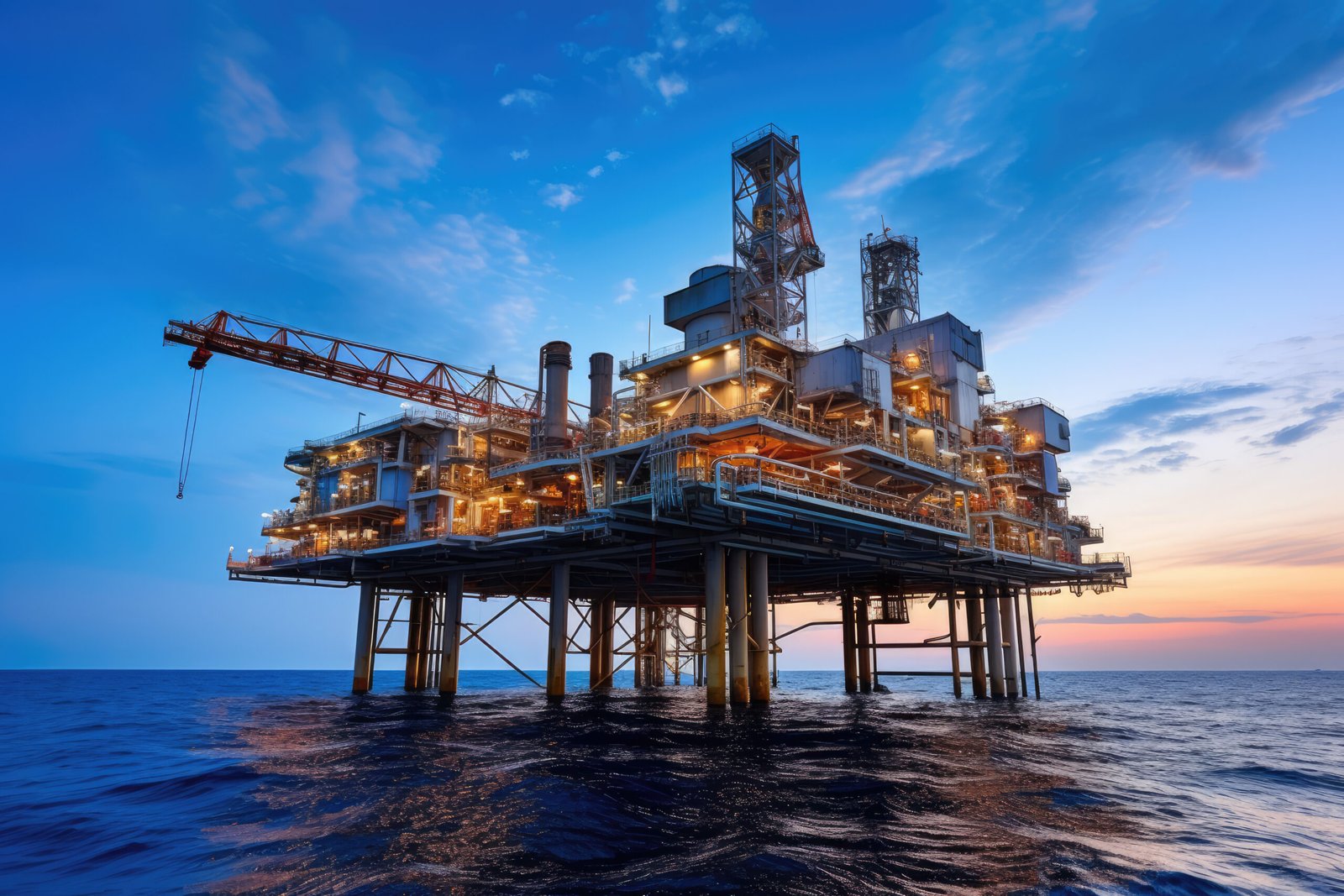
The North Sea remains Europe’s largest domestic oil & gas production base, even as its long-term trajectory points downward. UK output has fallen from around 4.4 million barrels of oil equivalent per day at the turn of the millennium to roughly 1 million today, and the UK government’s
North Sea Future Plan, published in late 2025, confirmed that no new exploration licenses will be issued — existing fields will instead be managed for the remainder of their productive life, supported by new “Transitional Energy Certificates” that allow continued drilling in already-licensed areas and tie-backs to existing infrastructure.

That doesn’t mean the basin is idle. Industry body Offshore Energies UK has argued that reforming the windfall tax on North Sea profits sooner rather than later could meaningfully slow the pace of decline and protect jobs, and several billion barrels of oil and gas equivalent are still expected to be produced from the UK Continental Shelf through 2050. For facility operators, this “manage, don’t expand” phase often means retrofitting and life-extension work on existing platforms — projects that frequently involve upgrading fire and gas detection systems to current standards as part of the scope.
Safety Regulation: A High and Rising Bar
Europe’s offshore safety framework remains among the most rigorous in the world, and it isn’t standing still. The EU’s
Directive on Safety of Offshore Oil and Gas Operations (2013/30/EU) — adopted in direct response to the Deepwater Horizon disaster — requires every operator to prepare a detailed Major Hazards Report before drilling begins, covering risk assessment, emergency response planning, and independent verification of safety-critical equipment. National regulators verify compliance on an ongoing basis, and EU countries report annually on installations, incidents, and enforcement action.
In the UK, this is implemented through the Safety Case regime, which requires operators to demonstrate — not just document — that major accident hazards are identified and controlled. Regulatory scrutiny increasingly focuses on whether operators actually follow their own Safety Case commitments in daily operations, not merely whether the paperwork exists. The lessons of historical disasters, from Piper Alpha to Deepwater Horizon, continue to directly shape inspection priorities: permit-to-work discipline, simultaneous-operations (SIMOPS) management, and the integrity of muster and temporary refuge systems remain top-tier concerns for regulators across the region.
For distributors and integrators, this regulatory environment is a constant: whatever the price of oil or the pace of the energy transition, European operators cannot treat fire and gas detection, suppression, or emergency shutdown systems as discretionary. Compliance is the floor, not the
ambition.
Digitalization Is Changing How Risk Gets Managed
Alongside regulation, technology is reshaping how European operators manage safety and reliability. 2026 marks a clear shift from pilot projects to industrial-scale deployment of AI and IIoT across the sector: intrinsically safe wireless sensors are now commodity hardware, and operators are using machine learning to move from reactive maintenance toward predictive and prescriptive strategies.

- Computer vision and thermal imaging are being used to detect hydrocarbon vapor plumes, corrosion under insulation, and equipment hot spots that are invisible to periodic manual inspection.
- Digital twins of offshore facilities are helping operators simulate configurations and emergency scenarios before committing capital, and in some cases to explore unmanned or reduced-crew operations.
- AI-driven predictive maintenance is being layered onto vibration, temperature, and gas-detection data to catch degradation earlier and cut down on the noisy, low-value alerts that used to cause alarm fatigue.
None of this replaces certified fire and gas detection hardware or suppression systems — it complements them, feeding better data into the safety systems that remain the last line of defense when a leak, spark, or fire actually occurs. If anything, the more digitalized a facility becomes, the more its safety architecture needs to be built on reliable, well-integrated detection technology from the start.
What This Means for Operators and Their Safety Partners
Put together, these trends define oil and gas Europe 2026: a market smaller in some areas (North Sea exploration), larger in others (LNG import infrastructure), and safer and more data-driven almost everywhere. A few practical implications stand out:
- LNG buildout means new fire and gas detection scopes.
Each new or expanded terminal is a fresh project with cryogenic and vapor-specific safety requirements. - Life-extension work on aging North Sea assets
often triggers safety system upgrades to bring older installations up to current standards. - Regulatory scrutiny is only increasing, which
keeps demand for certified, well-documented detection and suppression systems structurally high regardless of oil price cycles. - Digitalization raises the bar for integration,
rewarding safety partners who can connect detection systems cleanly into modern SCADA, IIoT, and monitoring platforms.
Blue BMS Is Now Based in Europe — Right Where This Is Happening
