Lithium-Ion Battery Safety: How Early Detection Prevents Thermal Runaway
Fire Safety · Battery Safety · June 2026
Quick Answer
A lithium-ion battery can enter thermal runaway when overheating, physical damage, or electrical failure triggers a self-sustaining temperature increase inside the cell. Early off-gas detection systems can identify battery failure minutes before fire or explosion occurs, allowing operators to intervene before a critical incident develops.

When a Parking Garage Fire Makes Global Headlines
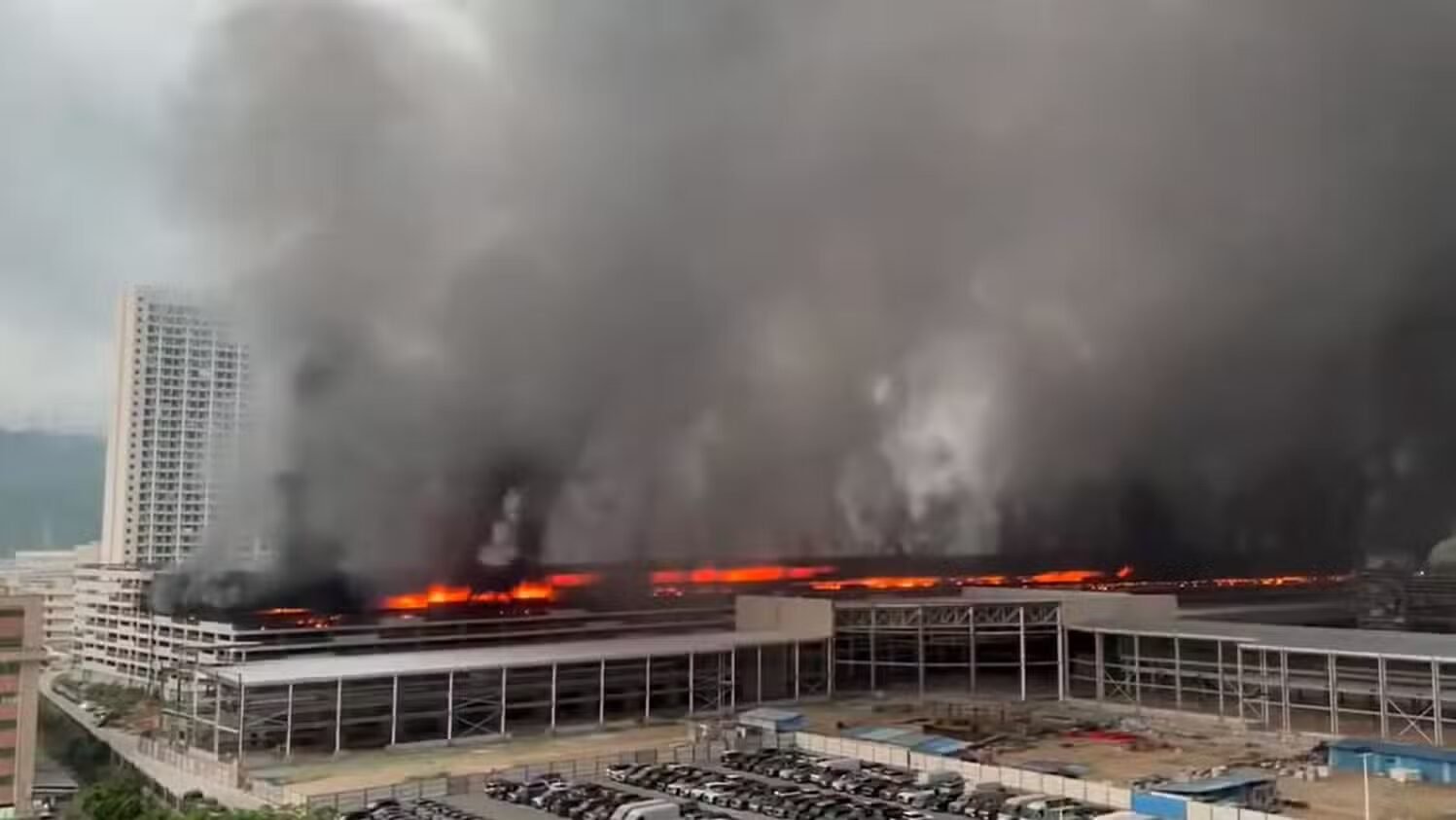
In April 2026, a fire broke out at a multi-story parking garage at BYD’s Pingshan campus in Shenzhen, China. Emergency response teams quickly controlled the incident, and investigations later confirmed that the cause was related to external construction activities rather than a lithium-ion battery failure.
Even so, the event reignited a global discussion about lithium-ion battery safety.
As electric vehicles, Battery Energy Storage Systems (BESS), and backup power installations become increasingly common, organizations are asking an important question:
How can a lithium-ion battery failure be detected before it becomes a fire?
The answer lies in understanding thermal runaway and implementing early-warning detection technologies.
What Is Thermal Runaway in a Lithium-Ion Battery?
Thermal runaway is one of the most significant risks associated with lithium-ion battery systems.
It occurs when a battery cell experiences an uncontrolled increase in temperature that accelerates internal chemical reactions. As heat builds, the cell becomes unstable and can trigger neighboring cells to fail, creating a cascading event throughout the battery system.
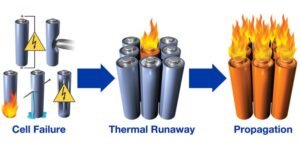
Common causes include:
- Overheating
- Internal short circuits
- Mechanical damage
- Manufacturing defects
- Overcharging
- Improper installation
In large battery installations, thermal runaway can result in:
- Fires
- Explosions
- Toxic gas release
- Equipment loss
- Extended operational downtime
The challenge is that conventional smoke and heat detectors typically respond after the failure process is already well underway.
Why Traditional Fire Detection Is Often Too Late
Most fire protection systems rely on smoke, heat, or flame detection.
However, a lithium-ion battery often releases warning signs before visible smoke or flames appear.
As internal pressure increases inside a failing cell, electrolyte solvent vapors and volatile organic compounds (VOCs) begin to escape.
These gases can be detected several minutes before thermal runaway occurs.
This creates a valuable intervention window that allows operators to:
- Isolate affected battery strings
- Activate ventilation systems
- Shut down charging operations
- Prevent propagation to adjacent cells
For battery energy storage facilities, these few minutes can mean the difference between a manageable event and a major incident.
Off-Gas Detection: The Earliest Warning of Lithium-Ion Battery Failure
Off-gas detection is currently one of the most effective technologies available for lithium-ion battery protection.
Rather than waiting for smoke or fire, the technology monitors for electrolyte solvent vapors released during the earliest stages of battery degradation.
Research and field testing have demonstrated that off-gas events often occur between two and thirty minutes before thermal runaway.
This early-warning capability makes off-gas detection particularly valuable in:
- Battery Energy Storage Systems (BESS)
- EV charging facilities
- Data center UPS rooms
- Renewable energy storage installations
- Industrial battery backup systems
- Critical infrastructure facilities
How the Li-ion Tamer Gen 3 Detects Battery Failure Before Thermal Runaway
The Li-ion Tamer Gen 3, available through Honeywell, Notifier, and Fire-Lite networks, is specifically designed to detect battery off-gassing before thermal runaway occurs.
Unlike conventional fire detection technologies, the system continuously monitors for the chemical signature of lithium-ion battery cell failure.
Key Features
- Early detection of electrolyte solvent vapors
- Continuous temperature monitoring
- Humidity monitoring at each sensing node
- Single-cell failure identification
- Scalable architecture for BESS applications
- Calibration-free sensing technology
- Modbus 485 and CANBus integration
- ETL certification to UL 61010 and CSA 22.2
This proactive approach provides facility managers and safety teams with additional time to evaluate and mitigate developing hazards.
https://bluebms.com/product/li-ion-tamer-gen-3-demo-kit-2/
LT-SEN-MOS: Battery Protection for Smaller Installations
Not every facility requires a large-scale battery monitoring system.
The LT-SEN-MOS provides targeted lithium-ion battery protection for smaller battery cabinets, enclosures, and localized energy storage systems.
Benefits
- Plug-and-play installation
- Three relay outputs
- Modbus integration
- CANBus communication
- Calibration-free operation
- Simplified maintenance through bump testing
Organizations seeking cost-effective battery monitoring can deploy off-gas detection without the complexity of enterprise-scale systems.
https://bluebms.com/product/xtralis-lt-sen-mos-li-ion-tamer-sensor-multi-output-solution/
Xtralis LT-SEN-MOS Li-ion Tamer Sensor Multi Output Solution
Integrating Battery Detection with Existing Fire Systems
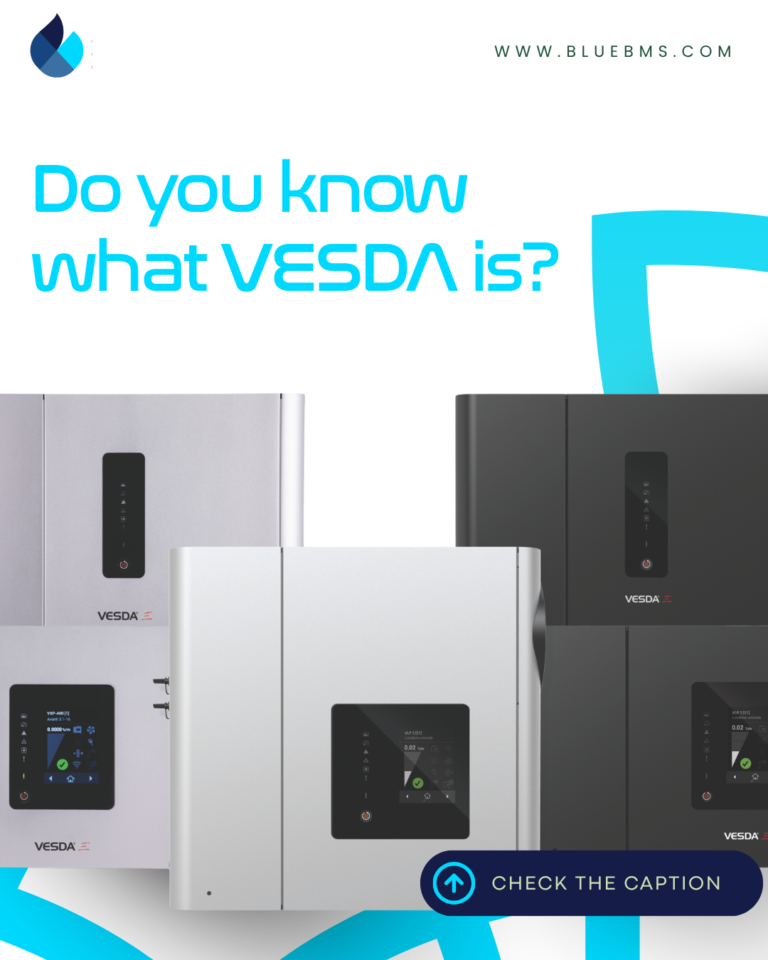
Many facilities already operate aspirating smoke detection systems such as VESDA.
The VESDA Modbus HLI Type 2 (VHX-0410) allows lithium-ion battery monitoring data to be integrated into broader fire detection and building management infrastructures.
Capabilities include:
- Monitoring up to 40 VESDA detectors
- Support for 200 zones
- Modbus communication
- Simplified configuration
- Integration with third-party platforms
https://bluebms.com/product/vesda_modbus_hli/
Why Lithium-Ion Battery Safety Matters More Than Ever
Global adoption of lithium-ion battery technology continues to accelerate.
Battery systems now power:
- Electric vehicles
- Renewable energy projects
- Data centers
- Industrial facilities
- Telecommunications infrastructure
- Critical backup power systems
As deployment grows, so does the importance of implementing detection technologies capable of identifying failure before thermal runaway begins.
Insurance providers, regulators, facility operators, and system integrators increasingly recognize off-gas detection as a critical component of modern battery safety strategies.
Frequently Asked Questions
What causes thermal runaway in a lithium-ion battery?
Thermal runaway can be caused by overheating, physical damage, manufacturing defects, overcharging, or internal electrical faults that trigger uncontrolled heat generation inside the battery cell.
Can a lithium-ion battery fire be prevented?
Many incidents can be mitigated or prevented through early detection technologies such as off-gas monitoring, proper battery management systems, ventilation, and fire protection strategies.
What is off-gas detection?
Off-gas detection identifies electrolyte solvent vapors released by a failing lithium-ion battery before visible smoke or fire develops.
How much warning time does off-gas detection provide?
Depending on battery chemistry and failure mode, off-gas detection can provide warning anywhere from a few minutes to over thirty minutes before thermal runaway occurs.
Where is off-gas detection commonly used?
Battery Energy Storage Systems (BESS), EV charging stations, UPS rooms, data centers, renewable energy projects, and industrial battery installations.
Conclusion
The recent BYD parking garage incident highlighted how quickly concerns surrounding lithium-ion battery safety can spread across the industry.
While investigators ruled out battery failure in that specific event, the discussion remains highly relevant.
Thermal runaway continues to represent one of the most significant risks associated with modern battery systems. The ability to detect battery failure before smoke, fire, or explosion occurs is becoming an essential requirement for facilities operating lithium-ion battery installations.
Early-warning technologies such as off-gas detection provide a critical opportunity to intervene before a minor fault becomes a major emergency.
For organizations managing Battery Energy Storage Systems, EV infrastructure, data centers, or industrial power systems, investing in proactive battery monitoring is no longer optional, it’s a key part of a comprehensive safety strategy.
Blue BMS: Your Source for Battery Safety Solutions
At Blue BMS, we supply and support the full Li-ion Tamer product family alongside a comprehensive portfolio of fire detection, suppression, and building safety systems, trusted by facilities in the Oil & Gas, industrial, commercial, and critical infrastructure sectors worldwide.
Our team works directly with distributors, integrators, and procurement professionals to ensure the right solution is specified, sourced, and supported.
Explore our Li-ion Tamer product range:
- Li-ion Tamer Gen 3 Demo Kit — LT-DKT
- Li-ion Tamer Sensor MOS — LT-SEN-MOS
- VESDA Modbus HLI Type 2 — VHX-0410
📩 Have a project that requires battery safety detection? Contact our team, we’ll help you specify the right solution.