Fire Alarm Deactivated During Renovation: Real Charges, Real Consequences
When a fire alarm is deactivated during renovation, someone is making a decision. And as the world just witnessed in Hong Kong, that decision can lead directly to a manslaughter charge.
In November 2024, a fire devastated the Wang Fuk Court housing complex in Hong Kong — killing 168 people in the deadliest residential building fire globally since 1980. On June 10, 2026, authorities announced the first criminal charges: 25 counts against two companies and seven individuals. The charges include manslaughter, conspiracy to defraud, money laundering, tax evasion, and attempting to pervert the course of justice.
This is no longer a cautionary tale. It is a legal precedent.
The Charges Filed and Who Is Being Held Accountable
Two firms are at the center of the case:
Prestige Construction and Engineering — the main contractor responsible for delivering renovations at Wang Fuk Court — has been charged with manslaughter. Its director, Ho Kin-yip, 52, faces the same charge personally and was denied bail.
Will Power Architects — the structural engineering consultancy overseeing the project — has also been charged with manslaughter. Its director, Wong Hap-yin, 40, and registered inspector Ng Yeuk, 44, were also charged and denied bail.
Beyond manslaughter, the charges extend to corruption: fraud in the tendering process, fraud in project supervision, money laundering, and attempts to deceive investigators — including hiding a large sum of cash and pressuring a witness to lie. A total of 35 people have been arrested by police, with Hong Kong’s anti-graft agency, the ICAC, separately arresting 23 more including consultants and members of the building’s owners’ corporation.
The case has been adjourned to September 2, 2026 for further investigations.
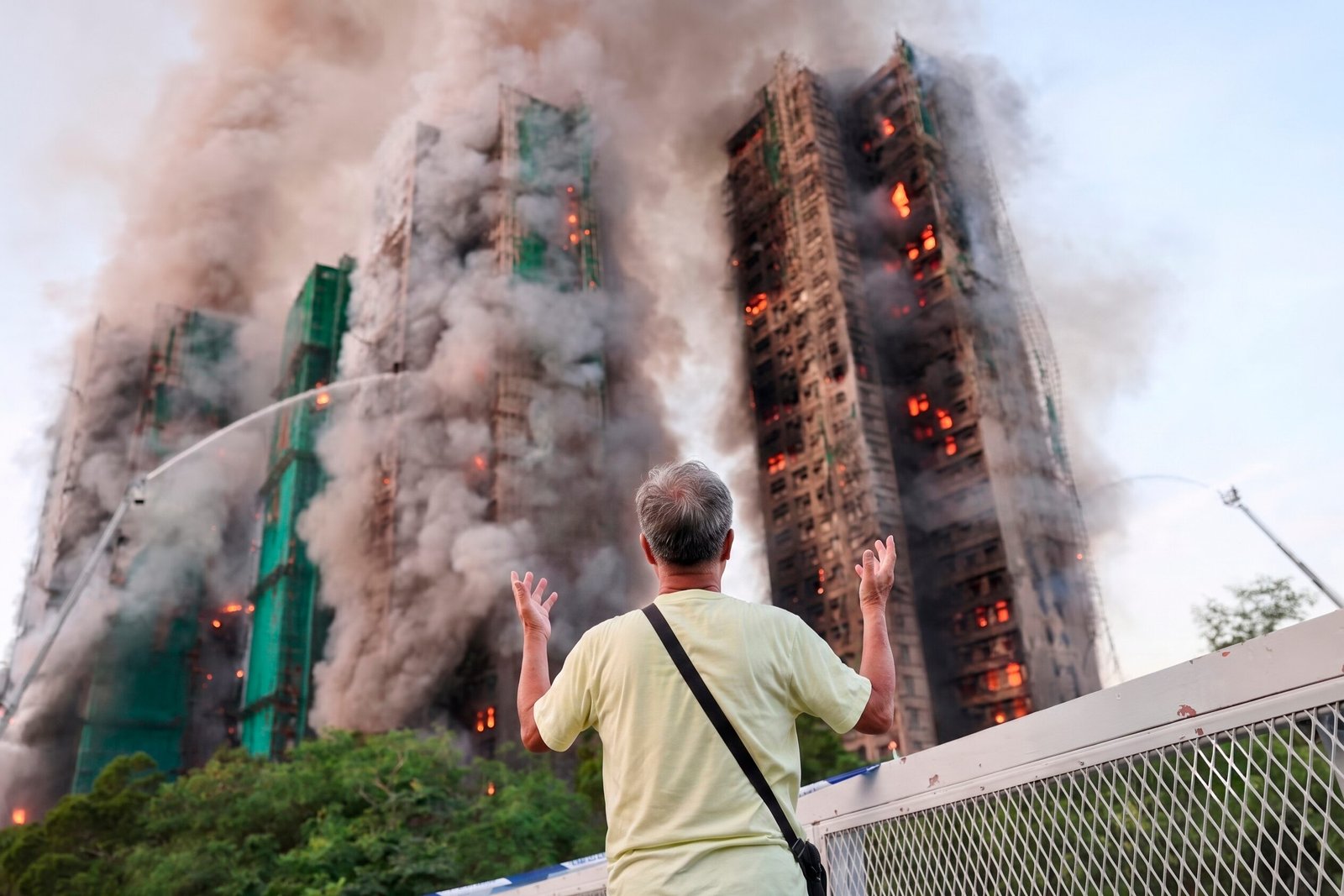
The fire at the Wang Fuk Court complex in Hong Kong. Li Zhihua / China News Service via Getty Images
What the Investigation Found
The independent committee probing the fire identified the failures that allowed 168 people to die:
- Fire alarms across seven of the eight residential blocks were deactivated during the renovation.
- Windows were boarded up using flammable foam boards, accelerating the spread of fire and cutting off escape routes.
- Construction workers were leaving lit cigarette butts throughout the site.
The committee’s lead lawyer stated at a public inquiry: nearly all fire safety systems designed to protect lives failed on the day of the fire — because of human decisions, not equipment failure.
The ICAC principal investigator summed it up clearly: “We suspect that this unfortunate incident was caused by individuals acting in their own self-interest, with complete disregard for the safety of residents’ lives and property.”
Could This Happen to Your Company?
The Wang Fuk Court charges are not unique to Hong Kong law. Across the US, UK, EU, and the Middle East, fire safety negligence during construction and renovation carries criminal liability — for contractors, consultants, inspectors, and building owners alike.
The pattern that led to these charges is more common than most organizations want to admit:
- Fire alarm systems taken offline during renovation with no documented authorization or reinstatement plan
- Contractors introducing combustible materials to spaces without active fire detection
- Inspection and supervision records that don’t reflect what actually happened on site
- Pressure to keep projects on schedule overriding safety compliance decisions
Any of these situations — in your building, on your renovation project, under your company’s watch — creates the same exposure that Prestige Construction and Will Power Architects now face.
The Grenfell Tower inquiry in the UK and similar cases worldwide have already established that renovation contractors and consultants can face criminal prosecution for fire safety failures. Wang Fuk Court raises the stakes further: this time, charges came swiftly, broadly, and reached from site-level decisions all the way to company directors.
A Global Reminder for Building Owners and Facilities Teams
How Blue BMS Helps You Stay on the Right Side of That Line
Blue BMS works with building owners, EPC contractors, and facility managers across Oil & Gas, hazardous industrial, and commercial sectors to ensure fire detection and suppression systems are never a liability.
That means systems that stay operational during renovation — not taken offline. Addressable architectures from brands like Honeywell, Notifier, Det-Tronics, and Autronica that flag any zone going offline immediately, creating a documented, auditable trail. Suppression systems from Ansul and Kidde Fenwal that are specified, installed, and maintained to code — with records that hold up to scrutiny.
It also means early smoke detection through VESDA aspirating systems that identify risk before it becomes a fire — and before it becomes a criminal investigation.
The companies charged in Hong Kong did not have systems that failed. They had systems they chose not to use. Blue BMS makes sure your systems are working, documented, and defending you — not being used as evidence against you.
Speak to our team at bluebms.com — before your next renovation project begins.
Sources: BBC News | Grenfell Tower Public Inquiry | NFPA 241