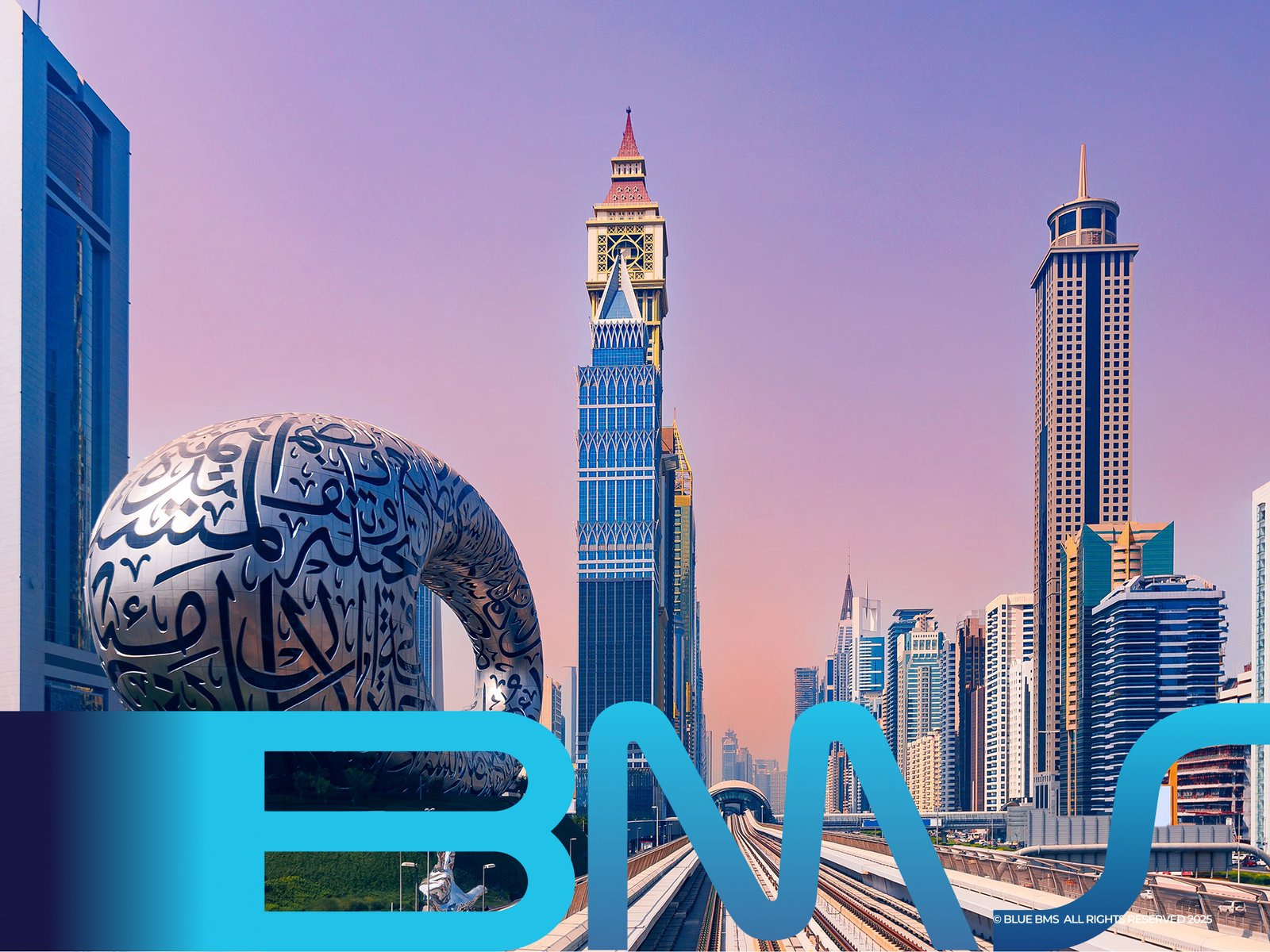
Radically transformed in recent decades, Dubai, once an economy rooted in fishing and pearl diving, has evolved into a global center for technology, innovation, and multicultural coexistence. This remarkable transformation makes Dubai the ideal setting for Blue BMS’s international expansion.
For us, establishing operations in this emirate was not just a geographical decision, but a strategic alignment with the vision of a “Smart City” that houses the world’s tallest building and a vibrant society composed of over 200 nationalities. Dubai is now the ideal laboratory for excellence in Smart Building Management and Connectivity.
In this article, you will see:
The Strategic Vision: A Global Innovation Hub
Many analysts describe Dubai as a city designed for the future. The transition from a traditional trade economy to a knowledge-based economy demonstrates resilience and a precise focus on cutting-edge technology—values that resonate deeply with Blue BMS.
The city does not just adopt new technologies; it creates and tests them on an urban scale. From autonomous transport initiatives to government strategies involving Blockchain and AI, being in Dubai means being at the forefront of trends that will dictate the future of urban and building management.
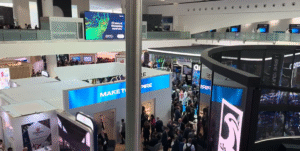
Diversity and Talent: Dubai’s Human Capital
One of the most fascinating aspects of our expansion is the human environment. Dubai is a true global cultural melting pot. With approximately 90% of the population consisting of expatriates, the business environment is enriched by unprecedented cultural diversity.
Why is this important for innovation?
- Knowledge Exchange: Professionals from every continent bring best practices from their home countries, creating an ecosystem of continuous learning.
- Global Mindset: Daily interaction with over 200 nationalities fosters tolerance, creativity, and the ability to solve complex problems from multiple perspectives.
- Respect and Tradition: Despite being cosmopolitan, the city maintains its Arab roots. The concept of the Majlis (places for gathering and connection) teaches us that, even in the digital age, respect and human relationships are the foundation of any successful partnership.
“At Blue BMS, we believe that technology connects systems, but it is the diverse culture that connects ideas and drives true progress.”
Digital Infrastructure and Smart Living
Beyond human capital, Dubai’s physical and digital infrastructure is a major attraction. The city operates under the Smart Dubai concept, where digitalization aims to make life more efficient, safe, and impactful.
For a company focused on BMS (Building Management Systems), this is a dream scenario. The city demands:
- Ultra-high-speed connectivity (widespread 5G).
- Sustainability is integrated into urban design.
- Buildings that “think” and react to the extreme environmental conditions of the desert.
Engineering Challenges: From Burj Khalifa to Palm Jumeirah
Visiting Dubai is like walking through the future of civil engineering and automation. Our activities have led us to study landmarks that defy logic and depend on critical building management:
1. Burj Khalifa
At 829.8 meters, the world’s tallest structure is a technological marvel. It utilizes advanced climate control systems that extract cleaner, cooler air from the upper floors, alongside a complex network of IoT sensors to monitor the building’s structural health in real-time.
2. Palm Jumeirah
The world’s largest artificial island added 78.6 km of coastline to the city. Maintaining utility infrastructure (water, power, and data) on an island built over the sea requires constant monitoring and intelligent distribution systems.
These icons prove that automation and intelligent management are vital for sustaining modern megastructures.
Follow our journey in Dubai:
Check out our latest updates and on-the-ground content via LinkedIn:
FAQ – Frequently Asked Questions
For our partners and international readers, we have answered the most common questions about the innovation environment in Dubai.
1. Why is Dubai considered a hub for innovation?
Dubai actively invests in future technologies, including AI, blockchain, and autonomous transport, supported by world-class digital infrastructure and “Smart City” government initiatives.
2. How does cultural diversity impact business in Dubai?
With over 200 nationalities, Dubai offers a unique environment where diverse perspectives foster creativity and global best practices, making it ideal for international companies like Blue BMS.
3. How tall is the Burj Khalifa, and who designed it?
The Burj Khalifa is 829.8 meters (2,722 ft) tall and was designed by the architectural firm Skidmore, Owings & Merrill (SOM), with Adrian Smith as the chief architect.
4. What role does technology play in Dubai’s buildings?
Technology is crucial. Due to the extreme climate and the height of skyscrapers, advanced Building Management Systems (BMS) are essential for energy efficiency, cooling, and safety.
5. What is “Palm Jumeirah”?
It is the world’s largest man-made island, an engineering feat created to provide more development space and luxury living, requiring complex utility infrastructure management.
We share insights on technology, culture, and building management directly from the UAE.
Our Vision: Expanding to Dubai is like connecting to a high-performance global server. The foundation is solid and traditional, but the processing is powered by the most advanced technology on the planet.