Panama tanker explosion shuts bridge and raises global safety concerns
The Panama tanker explosion that occurred near the Bridge of the Americas is a powerful example of how industrial fire risks can escalate in seconds and impact critical infrastructure.
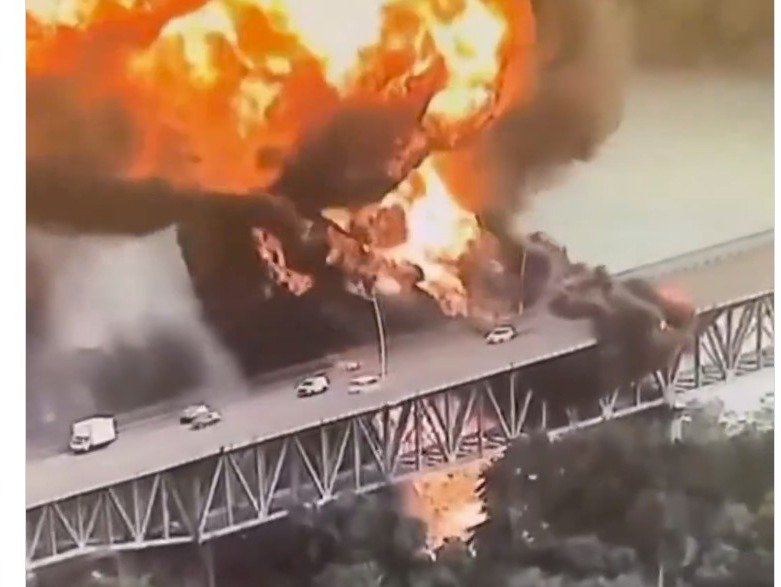
On April 6, 2026, a fuel tanker exploded in the La Boca area of Panama City, directly beneath one of the most important transport links in the country. The incident resulted in one fatality, multiple injuries, and the temporary shutdown of the bridge for structural inspection.
What initially appeared to be a localized fire quickly evolved into a high-risk scenario involving multiple explosions, intense heat exposure, and widespread disruption.
What happened during the Panama tanker explosion
The Panama tanker explosion began during a refueling operation at a fuel terminal facility located under the bridge.
According to authorities, the sequence of events followed a rapid escalation pattern.
A tanker truck caught fire while being refueled
The fire spread to at least two additional tanker trucks
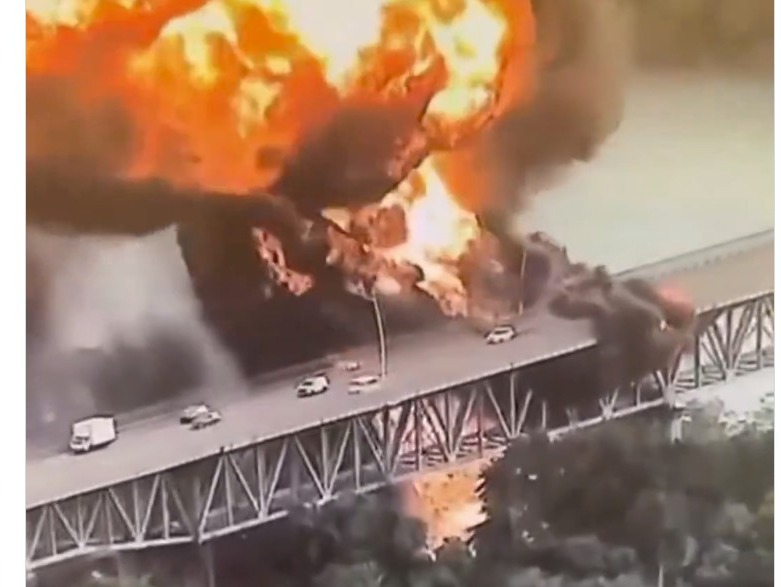
Multiple explosions occurred due to fuel ignition
A large fireball rose toward the bridge structure
Thick smoke spread across the surrounding area
The explosion generated enough heat and pressure to threaten both nearby vehicles and the bridge itself.
Emergency teams responded immediately, deploying more than 70 firefighters and dozens of vehicles. The fire took approximately three hours to be brought under control.
Impact on infrastructure and operations
One of the most critical consequences of the Panama tanker explosion was its impact on infrastructure.
The Bridge of the Americas was closed as a precaution while engineers assessed potential structural damage caused by heat exposure and blast pressure.
This bridge is not just a local road. It is a strategic connection point that links Panama City to the rest of the country and plays a role in logistics near the Panama Canal.
Despite the severity of the explosion, authorities confirmed that canal operations were not affected.
Still, the incident demonstrated how close a major disruption came to affecting global trade routes.
Why the Panama tanker explosion escalated so quickly
The Panama tanker explosion followed a classic industrial fire escalation model.
In fuel environments, three elements are always present
flammable material
oxygen
ignition source
When fuel vapors accumulate and are not detected early, the probability of ignition increases significantly.
In this case, the explosion occurred during refueling, one of the highest-risk moments in fuel handling operations.
Once ignition occurs, escalation is almost immediate.
Fuel vapor ignites
Pressure builds rapidly
Explosion occurs
Secondary fires spread
Nearby assets become exposed
The presence of multiple tanker trucks amplified the event, creating a chain reaction scenario.
The role of detection systems in preventing incidents like the Panama tanker explosion
One of the key questions raised by the Panama tanker explosion is whether early detection could have prevented escalation.
In high-risk environments, detection systems are designed to identify hazards before ignition.
These include
Infrared gas detectors that monitor hydrocarbon concentration
Flame detectors that identify fire signatures within milliseconds
Continuous monitoring systems integrated with alarms and shutdown controls
If gas concentration reaches dangerous levels, systems can trigger alerts or automatic shutdowns before ignition occurs.
Without detection, the first sign of danger is often the explosion itself.
Fire suppression and containment failures
The Panama tanker explosion also highlights the importance of immediate fire suppression.
Once ignition occurs, response time becomes critical.
Effective suppression systems for fuel-related fires include
Foam systems designed for hydrocarbon fires
Deluge systems for large-scale coverage
Water mist systems for rapid temperature reduction
Clean agent systems in controlled environments
In scenarios where suppression is delayed or unavailable, fire spreads rapidly and becomes more difficult to control.
The three-hour firefighting effort in this incident shows how complex these situations can become once escalation begins.
A near miss for global logistics
The Panama tanker explosion occurred near one of the most strategic trade routes in the world.
The Panama Canal is a critical artery for global shipping, and any disruption to surrounding infrastructure could have significant economic consequences.
While the canal remained operational, the proximity of the explosion to key infrastructure raises an important concern.
Industrial incidents do not respect boundaries.
A fire that starts in a fuel depot can impact transportation networks, supply chains, and even international trade.
Lessons from the Panama tanker explosion
The Panama tanker explosion reinforces several critical safety principles.
Incidents escalate faster than response systems
Fuel handling operations require continuous monitoring
Detection systems are essential for prevention
Fire suppression must be immediate and engineered
Infrastructure near hazardous areas must be protected
The most important takeaway is that prevention is always more effective than response.
How Blue BMS helps prevent scenarios like the Panama tanker explosion
At Blue BMS, solutions are designed specifically for environments where incidents like the Panama tanker explosion can occur.
This includes
Fire and gas detection systems for hazardous areas
Integrated alarm and control systems
Engineered fire suppression solutions
Technologies compliant with global safety standards
The objective is to detect risks early, respond instantly, and prevent escalation before it becomes a critical event.
Conclusion
The Panama tanker explosion is not just an isolated accident. It is a real-world example of how industrial risks, when not controlled early, can impact infrastructure, operations, and safety at a large scale.
It highlights the importance of combining detection, suppression, and system integration to manage fire risks in high-hazard environments.
As investigations continue, the focus should not only be on what caused the explosion, but on how similar events can be prevented in the future.