Fire at Rio Olympic Velodrome: What Happened
On April 8, 2026, a fire at Rio Olympic Velodrome raised serious concerns about fire safety in large-scale infrastructures. Located in the Olympic Park in Rio de Janeiro, the venue is a key facility built for international sporting events and high-performance training.

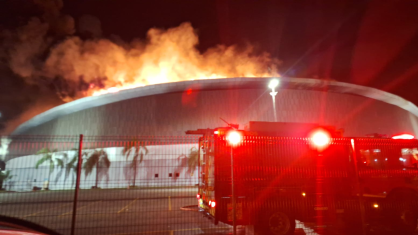
The fire began in the early morning around 4:17 AM and quickly spread across the roof structure. Emergency teams responded rapidly, deploying dozens of firefighters to control the flames.
Despite the intensity of the incident, no injuries were reported. The cycling track and most of the internal structure were preserved, while the damage was largely concentrated on the roof area.
This fire at Rio Olympic Velodrome serves as a real-world example of how quickly fire can escalate in modern architectural environments.
Why the Fire at Rio Olympic Velodrome Spread So Fast
The fire at Rio Olympic Velodrome did not become catastrophic, but the conditions were ideal for rapid fire propagation.
The roof structure was made of synthetic membrane materials, commonly used in large venues due to their lightweight and flexible properties. However, these materials can contribute to faster flame spread when exposed to ignition sources.
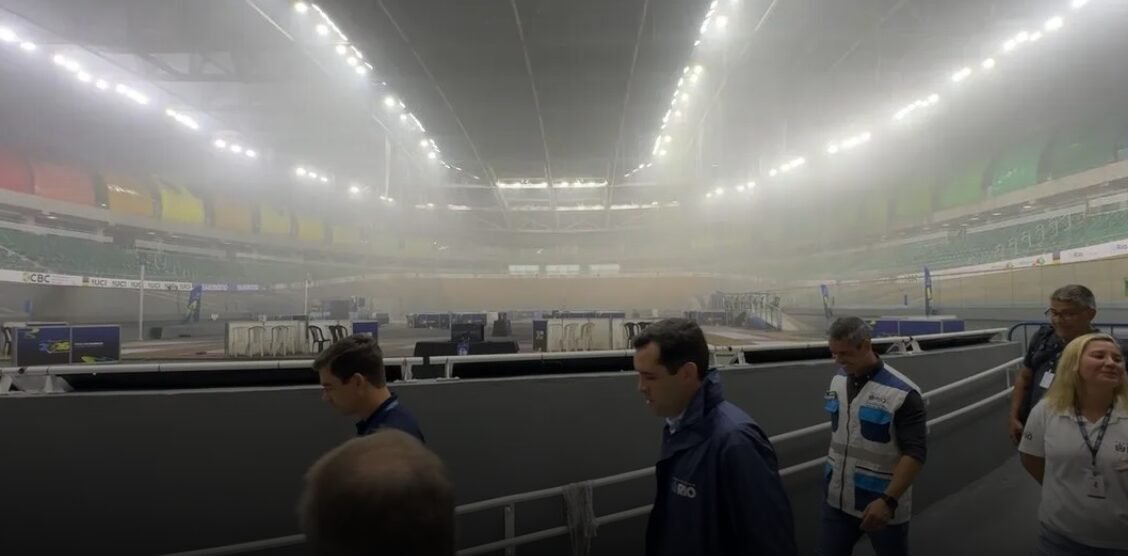
Another critical factor is the nature of large or semi-open environments. In these spaces, smoke does not accumulate quickly, which delays the activation of traditional smoke detection systems. Heat-based detection may also respond too late when flames develop rapidly across elevated surfaces.
This combination creates a dangerous window where the fire grows before any system reacts.
Fire at Rio Olympic Velodrome and the Problem of Late Detection
The biggest lesson from the fire at Rio Olympic Velodrome is not just about materials or structure. It is about detection timing.
In many infrastructures, there is a gap between ignition and system response. During this period, fire can spread freely, especially in environments with airflow and combustible surfaces.
Traditional detection systems rely on smoke or heat. But in open or high-ceiling environments, these indicators may take too long to reach sensors.
This is where advanced technologies such as flame detection become critical. Flame detectors identify fire through infrared and ultraviolet radiation, allowing detection in milliseconds rather than minutes.
In real scenarios, this difference directly impacts the scale of damage.
What the Fire at Rio Olympic Velodrome Teaches About Infrastructure Safety
Although the incident occurred in a sports venue, the implications go far beyond that.
The same risks seen in the fire at Rio Olympic Velodrome are present in many environments, including airports, warehouses, industrial plants, data centers, and energy facilities.
In high-risk industries such as oil and gas, a similar delay in detection could lead to explosions, shutdowns, or severe financial losses.
Fire safety must be approached as a system, not a single solution. Detection, alarm, and suppression need to work together as part of an integrated strategy.

How Blue BMS Helps Prevent Incidents Like the Fire at Rio Olympic Velodrome
At Blue BMS, the focus is on delivering solutions for environments where fire risk cannot be underestimated.
Our systems are designed to reduce detection time and improve response efficiency through:
- Advanced flame detection technologies including UV, IR, and multispectrum IR
- Gas detection systems for hazardous areas
- Integrated fire alarm and suppression systems
- Full compatibility with BMS, SCADA, and PLC platforms
- Compliance with international standards such as NFPA, ATEX, IECEx, and SIL
The goal is simple. Detect faster, respond earlier, and prevent escalation.
Final Thoughts on the Fire at Rio Olympic Velodrome
The fire at Rio Olympic Velodrome did not result in casualties, but it highlights how vulnerable even modern infrastructures can be.
Fire does not wait for systems to react. It evolves in real time, often faster than expected.
The difference between a controlled incident and a major disaster often comes down to seconds.
And those seconds depend on how early the system detects the threat.
FAQ
What caused the fire at Rio Olympic Velodrome
The exact cause is still under investigation, but early reports suggest it may have started externally and spread to the roof.
Was the structure severely damaged
No. The main structure and cycling track remained intact, with damage mostly limited to the roof.
Were there any injuries in the fire at Rio Olympic Velodrome
No injuries were reported during the incident.
What is the main lesson from the fire at Rio Olympic Velodrome
The key takeaway is that early fire detection is critical, especially in large or open environments where traditional systems may respond too late.
Internal Link Suggestion
Explore more fire and gas safety solutions at: https://bluebms.com