Smart buildings represent the future of facility management, combining technological innovation with operational efficiency. However, many organizations overlook a critical component: integrated security architecture. A truly smart building isn’t just one that automates HVAC and lighting—it’s one where security systems work intelligently together to protect assets, personnel, and operations in real time.
This comprehensive guide breaks down the three pillars of modern smart building security: advanced CCTV systems, sophisticated gas detection technologies, and strategic zone-based management. Each component plays a distinct role, but their true power emerges when they’re integrated into a unified security ecosystem.
CCTV Technology Advancements
Evolution of CCTV Systems
The journey of CCTV technology spans decades, from analog cameras requiring dedicated coaxial cables to today’s network-based systems that integrate seamlessly with building management platforms.
Early Era (1980s-2000s): Analog cameras with local storage and manual monitoring. Limited coverage, high maintenance costs, and no integration capability with other building systems.
Transition Period (2000s-2010s): Introduction of digital compression and network cameras. DVRs replaced with NVRs (Network Video Recorders). First attempts at integration with alarm systems, though still largely disconnected workflows.
Modern Era (2015-present): AI-powered video analytics, cloud integration, edge computing, and real-time cross-system correlation. Cameras now serve as intelligent sensors, not just recording devices.
The shift from surveillance-only to intelligence-generating systems fundamentally changed how facilities approach security. Today’s CCTV isn’t about capturing evidence after an incident—it’s about preventing incidents from occurring.
Latest Technologies in CCTV

4K and 8K Resolution: Industry-standard identification now requires 25-50 pixels per face. A 2MP camera simply cannot deliver this level of detail. 4K cameras (8MP) are now the baseline for critical zones like server rooms, entry points, and control centers. 8K systems are becoming common in high-security environments.
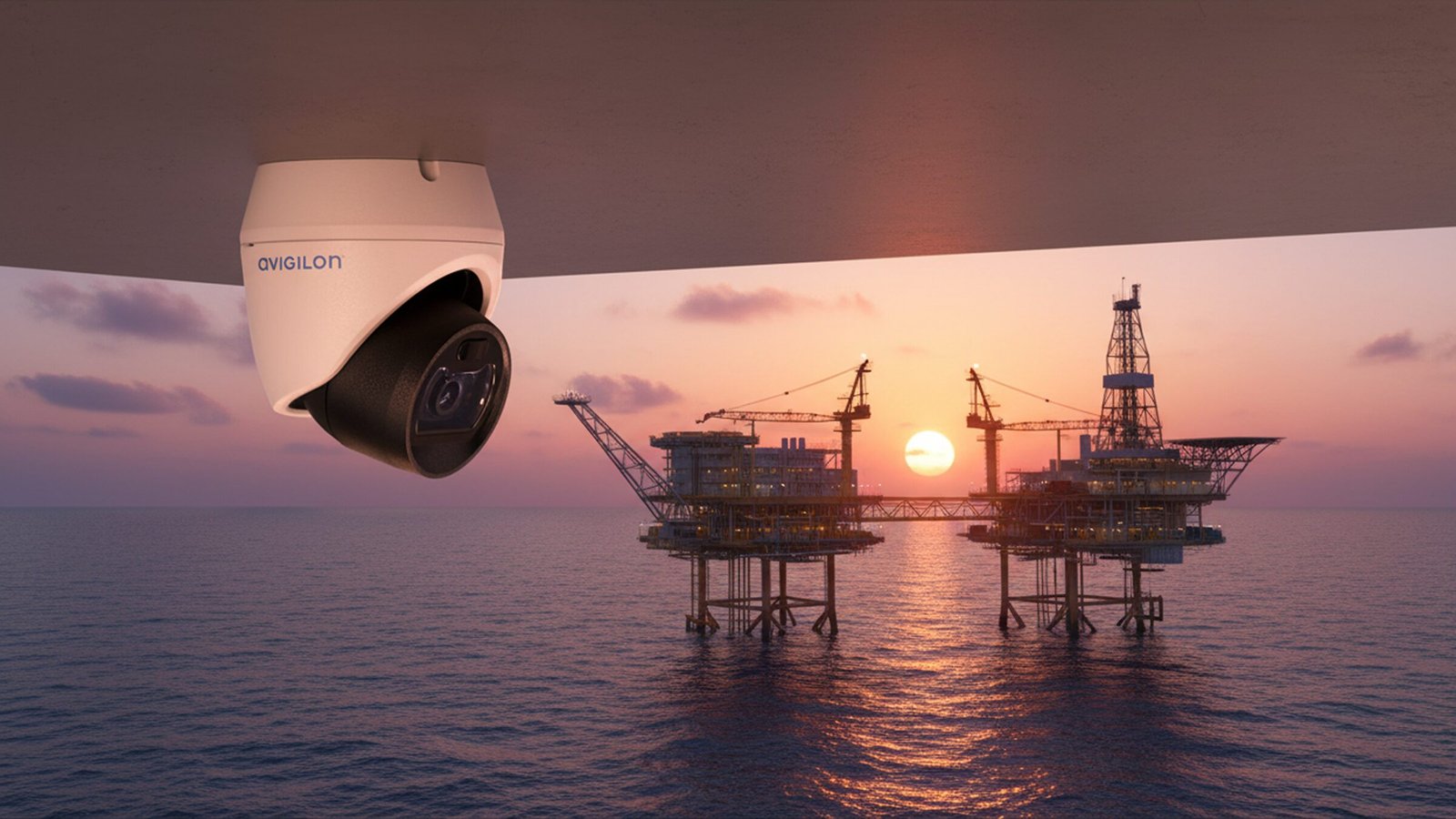
Thermal and Infrared Overlays: Thermal cameras detect heat signatures regardless of lighting conditions. For smart buildings with hazardous areas, thermal imaging provides an additional layer of intelligence—identifying heat anomalies, detecting equipment failures, and monitoring evacuation routes during emergencies.
AI-Powered Analytics: Modern CCTV systems no longer require constant human monitoring. Intelligent video analytics can detect:
- Unusual movement patterns (perimeter breach detection)
- Crowd density anomalies (evacuation risk identification)
- Unattended objects (potential threats)
- Behavioral analysis (identifying suspicious activities)
- Facial recognition (where compliant with local regulations)
Edge Computing and Distributed Processing: Rather than sending all video data to a central server, intelligent cameras process information locally. This reduces bandwidth requirements, improves response times, and maintains functionality even if central systems fail.
Cloud Integration and Hybrid Storage: Local edge storage provides redundancy, while cloud backup ensures long-term archive and cross-facility analysis. This hybrid approach balances security (data stays on-premises) with scalability (cloud provides unlimited archive capacity).
Low-Light and No-Light Performance: Starlight technology and thermal imaging eliminate the “darkness = blind spot” problem. Modern systems see clearly in conditions where human eyes fail completely.
Integration with Smart Building Systems
This is where CCTV becomes truly intelligent.
Access Control Synchronization: CCTV now automatically logs video evidence whenever access control events occur. Someone scans their badge to enter the server room? The system records exactly who, when, and the video footage from that moment. This integration eliminates the common problem of “we have the access log but can’t match it to the video.”
Alarm System Correlation: When a perimeter alarm triggers, the nearest CCTV camera automatically adjusts focus (if PTZ-capable) and records high-quality footage. The system timestamp-synchronizes, ensuring perfect correlation between the alarm event and visual documentation.
Zone-Based Response Automation: CCTV behavior changes based on zone type and time of day. Critical infrastructure zones maintain continuous high-resolution recording. Low-risk areas during business hours record standard resolution, but upgrade to high-resolution during off-hours when unauthorized presence is more suspicious.
Gas Detection Integration: This is the game-changer for hazardous environments. When gas sensors detect elevated levels, thermal CCTV automatically focuses on the affected area, providing visual documentation of the hazard and evacuation conditions. Personnel can see exactly where the issue is and what’s happening in real time.
Building Management System (BMS) Integration: CCTV data feeds into the central BMS, where facility managers see integrated alerts. A perimeter breach doesn’t just trigger an alarm—it appears on the facility dashboard alongside HVAC status, occupancy data, and other operational metrics. Security becomes part of holistic facility management.
Emergency Response Coordination: In crisis scenarios, CCTV feeds directly to emergency response teams. If evacuation is triggered due to gas detection, emergency personnel see live video of affected areas, occupancy counts, and evacuation route status—enabling faster, more informed response.
Smart building cyber security and privacy considerations
With great surveillance capability comes significant responsibility.
Video Data Encryption: All data in transit (between cameras and recorders) and at rest (stored footage) must be encrypted. This prevents unauthorized access even if someone gains physical access to storage devices.
Access Controls and Audit Trails: Not every facility employee needs access to CCTV footage. Role-based access ensures security staff, facility managers, and executives see only what they need. Every instance of someone accessing footage is logged—creating accountability and legal protection.
Data Retention Policies: How long should footage be kept? This depends on facility type, regulatory requirements, and operational needs. Oil & gas facilities might require 90-day retention. Office buildings might retain 30 days. Data retention policies must balance legal compliance with storage costs.
Compliance with Regulations: GDPR, CCPA, HIPAA, and industry-specific regulations impose strict rules on video surveillance. Facilities must implement consent mechanisms, privacy notices, and data deletion policies. The difference between “good security practice” and “lawsuit” is often compliance with these regulations.
Anonymization and Purpose Limitation: Video footage collected for security purposes cannot be repurposed for employee performance monitoring or sold to third parties without explicit consent. Privacy-preserving analytics (like crowd counting) can provide useful data without identifying individuals.
Cybersecurity for CCTV Systems: Camera systems are computers. They require regular patching, strong authentication, and network segmentation. A compromised camera can become a gateway to the entire facility network. Modern smart buildings treat CCTV systems with the same cybersecurity rigor as IT infrastructure.
Role of Gas Detectors
Types of Gas Detectors
Gas detection is the invisible foundation of smart building safety. Unlike a fire you can see or a security breach you can observe, gas hazards are silent, colorless, and deadly.
Catalytic Bead Sensors (LEL Detection):
- Detection method: Chemical combustion creates a change in electrical resistance
- Best for: Hydrocarbon detection (methane, propane, natural gas, LPG)
- Response time: Fast—typically 10-30 seconds to 90% reading
- Industry application: Oil & gas facilities, chemical processing plants, storage areas
- Advantage: Cost-effective, proven technology with decades of real-world use
- Limitation: Requires oxygen to function (won’t work in inert atmospheres)
Electrochemical Sensors:
- Detection method: Chemical reaction between target gas and electrode creates electrical signal
- Best for: Toxic gas detection (H₂S, CO, Cl₂, NO₂, NH₃)
- Response time: Moderate—30-120 seconds depending on gas type
- Industry application: Refineries, chemical plants, indoor air quality monitoring
- Advantage: Highly selective (each sensor targets specific gases)
- Limitation: Limited lifespan (typically 2-4 years); replacements required regularly
Infrared Sensors (NDIR):
- Detection method: Infrared light absorption at specific wavelengths unique to each gas
- Best for: CO₂ monitoring, some VOC detection, long-term facility monitoring
- Response time: Varies, but generally stable and reliable
- Industry application: Data centers (refrigerant), HVAC monitoring, indoor air quality
- Advantage: No consumables, extremely stable over time, minimal maintenance
- Limitation: Higher cost; requires precise calibration initially
PID Sensors (Photoionization Detectors):
- Detection method: UV light ionizes gas molecules, creating measurable ion current
- Best for: VOC (Volatile Organic Compound) detection, aromatic compounds, HVAC monitoring
- Response time: Very fast—1-3 seconds
- Industry application: Indoor air quality, HVAC maintenance, hazmat response
- Advantage: Detects broad range of organic compounds without gas-specific calibration
- Limitation: Requires battery power; affected by high humidity
Importance in Smart Buildings
Most facilities install gas detection because regulations require it. Smart buildings deploy gas detection because they understand the operational and human cost of gas hazards.
Personnel Safety: The primary function. Colorless, odorless gases like CO and H₂S can incapacitate or kill within minutes. Early detection provides the window needed to evacuate safely.
Asset Protection: Gas hazards don’t just threaten people—they threaten equipment. In data centers, refrigerant leaks damage servers before they damage lungs. In chemical processing, gas escapes can trigger cascading equipment failures.
Regulatory Compliance: OSHA, EPA, and industry-specific regulations mandate gas detection in certain environments. Non-compliance isn’t just a safety issue—it’s a legal liability.
Operational Continuity: A gas detection event triggers automatic facility response—HVAC shutdown, evacuation alerts, emergency protocols. Smart buildings manage this automatically rather than relying on human reaction times.
Insurance and Liability: Facilities with comprehensive gas detection systems typically receive lower insurance premiums and have stronger legal positions if incidents occur.
Integration with Other Security Systems
This is where gas detection becomes part of the broader security architecture.
CCTV Auto-Focus and Thermal Overlay: When gas sensors detect elevated levels, thermal cameras automatically pan to the affected area. Facility managers see the hazard visually—not just as a number on a sensor readout.
HVAC Automatic Shutdown: Contaminated air circulating through a facility exponentially increases personnel exposure. Smart buildings automatically shut down HVAC systems when hazardous gas concentrations are detected. This isolation contains the problem and prevents spread.
Access Control Lockdown: In hazardous operations zones, gas detection events trigger automatic access control lockdown. Doors seal, preventing personnel from entering contaminated areas. This is the opposite of fire response (where we unlock doors for evacuation)—it’s containment.
Evacuation Route Management: Different gas types require different evacuation strategies. Heavier-than-air gases (Cl₂, H₂S) pool in low areas—personnel should evacuate upward and away. Smart buildings automatically route personnel based on gas type and location.
BMS Integration: Gas detection events appear on the facility dashboard alongside occupancy data, HVAC status, and security alerts. Facility managers see the complete picture, enabling faster and better-informed decisions.
Personnel Notification: Smart alert systems notify affected personnel with specific guidance. Rather than a generic “evacuate,” modern systems provide direction: “Gas detected in basement. Proceed to emergency exit C on the north side. Emergency services have been notified.”
Historical Trending and Predictive Maintenance: Gas detection systems don’t just alert on critical thresholds. They track long-term trends, identifying equipment degradation before failures occur. A slow creep in CO levels might indicate a failing heating system weeks before it becomes critical.
Case Studies of Gas Detector Implementation
Oil & Gas Facility – North Sea Platform: A major offshore operator deployed integrated gas detection with CCTV and zone management. Result: Detection of a slow H₂S leak in a secondary valve that would have been missed by scheduled maintenance. The leak was minor but persistent—just enough to cause long-term health impacts to exposed personnel. Smart detection system identified it 18 months before routine maintenance would have caught it.
Data Center – Silicon Valley: A tech company’s data center experienced refrigerant leaks in the cooling system. Traditional facilities would rely on temperature alarms and ice accumulation to detect problems. The smart facility detected rising refrigerant concentrations via PID sensors integrated with thermal CCTV, showing the exact location of the leak. Result: 6-hour repair window instead of 48 hours of downtime while technicians hunted for the leak location.
Chemical Processing – Texas: A facility with hazardous chemical operations integrated electrochemical sensors for H₂S detection with automated HVAC shutdown and access control lockdown. A leak in a secondary containment vessel was detected within 60 seconds. Automatic systems sealed the area and evacuated personnel before concentration reached dangerous levels. The incident was prevented through system intelligence rather than emergency response.
Hospital – EU Facility: A European hospital implemented CO detection in parking garages and mechanical rooms to ensure staff safety. Integration with BMS provided real-time indoor air quality data. When a parking garage backup generator malfunctioned, CO sensors detected the problem before any occupant was affected. Automatic ventilation increased, problem was addressed, no personnel exposure.
Importance of Zone Types
Definition of Zone Types
A zone is more than a physical location—it’s a logical category that determines how the security system responds to events in that area.
Perimeter Security Zones: The facility boundary. Breach here triggers immediate escalation protocols.
Critical Infrastructure Zones: Server rooms, electrical systems, control centers. Access is restricted and monitored intensively.
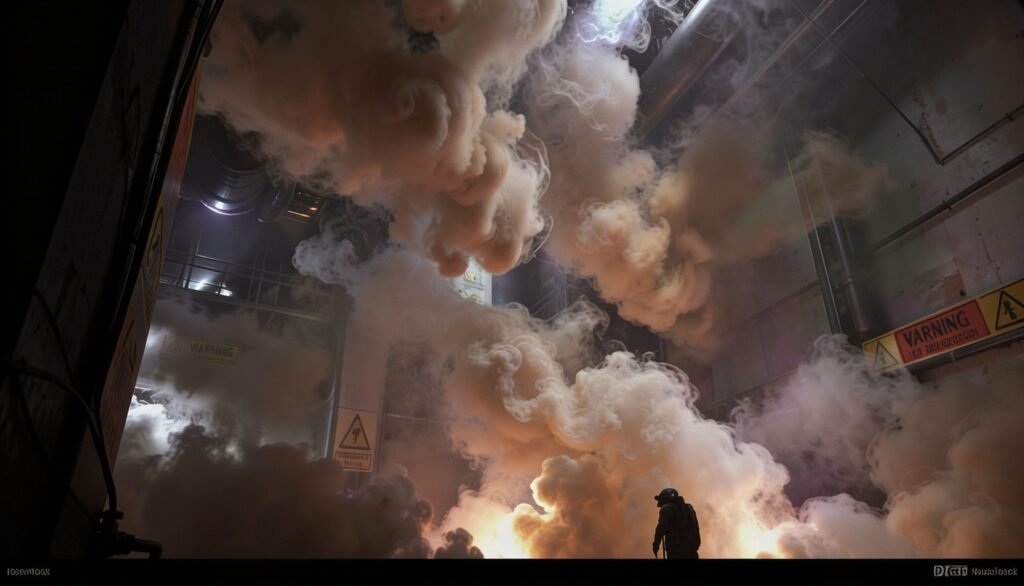
Hazardous Operations Zones: Areas where normal operations involve toxic, flammable, or high-pressure materials. Gas detection is continuous and multi-redundant.
Personnel Safety Zones: Common areas, offices, break rooms. Moderate monitoring balances security with privacy.
Transition/Buffer Zones: Stairwells, airlocks, decontamination areas. Response is contextual based on adjacent zone events.
Emergency Response Zones: First-aid stations, emergency exits, assembly areas. Monitoring ensures evacuation routes remain clear.
Each zone type has different CCTV coverage requirements, gas detection sensor types, and response protocols. A one-size-fits-all approach creates either over-monitoring (wasting resources and violating privacy) or under-monitoring (creating security gaps).
Benefits of Zone-Based Security
False Alarm Reduction: This is the game-changer. A single gas sensor reading might be a sensor drift or a minor localized event. But when two sensors in adjacent zones detect the same gas? Confidence jumps dramatically. Multi-zone confirmation reduces false alarms by approximately 70%.
Risk-Appropriate Response: A perimeter breach at 3 AM gets immediate police notification. A perimeter sensor trigger during a windy day during business hours gets human verification before escalation. Zone-based logic matches response intensity to actual threat level.
Resource Optimization: Why maintain high-resolution CCTV in break rooms when medium-resolution monitoring is adequate? Zone types enable right-sizing of security investment—maximum protection where risk is highest, proportionate monitoring elsewhere.
Evacuation Efficiency: Zone design fundamentally affects how personnel evacuate. Clear zone definitions create logical evacuation routes. Personnel know: “I’m in Zone 3A (operations), my assembly point is Zone 6B (external assembly area).” This reduces confusion and evacuation time.
Regulatory Compliance: Many regulations require zone-based risk assessment. Demonstrating that you’ve thoughtfully mapped zones, defined response protocols, and regularly tested evacuation routes provides strong legal protection.
Scalability: New facilities added to a campus can inherit the zone architecture from the main building. As facilities expand, new zones are added using proven design patterns rather than ad hoc approaches.
How to Design Effective Security Zones
Step 1: Risk Assessment Map every area of your facility and assess baseline risk:
- What hazards are present? (Gas, fire, unauthorized access, equipment damage, personnel injury)
- How many people occupy this area normally?
- What equipment/assets are here?
- What’s the consequence if this area is compromised?
Step 2: Hazard Identification Identify specific threats in each area:
- Toxic gases? Which ones? Where do they come from?
- Flammable materials? How are they stored?
- Critical infrastructure? What are single points of failure?
- Unauthorized access risk? External doors? Shared spaces?
Step 3: Zone Mapping Draw your facility with proposed zones. Use color coding:
- Red = Perimeter
- Dark blue = Critical infrastructure
- Orange = Hazardous operations
- Light blue = Personnel safety
- Green = Buffer/transition
- Purple = Emergency response
Verify that zones make operational sense—don’t split a logical work area across multiple zones.
Step 4: Detection Specification For each zone, specify monitoring requirements:
Perimeter zones: CCTV (motion detection), gas sensors (windward side), access control monitoring
Critical infrastructure zones: High-resolution CCTV, redundant motion detection, thermal overlay, gas detection (if applicable)
Hazardous operations zones: Continuous multi-sensor gas detection (minimum 2 independent sensors), thermal CCTV, automatic HVAC shutdown triggers
Personnel zones: Basic CCTV, CO detection (if applicable), emergency communication
Buffer zones: Context-dependent monitoring, evacuation route clearance verification
Emergency zones: Redundant monitoring, automatic incident documentation
Step 5: Response Protocol Definition For each zone, define what happens when an alert occurs:
Single zone alert → Investigation level Multi-zone alert → Escalation level Zone + perimeter breach → Lockdown level Zone + gas detection → Evacuation level
Step 6: Testing and Refinement Conduct regular drills:
- Evacuation tests (do people actually move through the routes you designed?)
- False alert scenarios (how do staff respond to test alerts?)
- Cross-system testing (does CCTV actually focus when gas is detected?)
Refine zones based on real-world results. What looked logical on paper might not work operationally.
Real-World Applications of Zone Types
Oil & Gas Processing Facility:
- Perimeter zones protect facility boundaries and prevent unauthorized access
- Critical infrastructure zones protect control rooms, emergency shutdown systems, and power distribution
- Hazardous operations zones blanket production areas with multi-redundant H₂S and LEL detection
- Buffer zones (airlocks, decontamination) manage transitions between risk levels
- Emergency zones ensure evacuation routes remain clear and personnel can assemble safely
Response protocol: H₂S detection in hazardous zone → HVAC shuts down, access locks, thermal CCTV focuses on leak location, personnel receive evacuation alert with specific routes. All automatic, <30 second response time.
Data Center:
- Perimeter zones control physical access to the facility
- Critical infrastructure zones protect server rooms, cooling systems, and power infrastructure
- Hazardous operations zones monitor refrigerant systems and backup generator areas
- Personnel zones provide necessary monitoring while respecting privacy in office areas
- Emergency zones ensure evacuation routes and emergency equipment access remain clear
Response protocol: Refrigerant leak detected → CCTV thermal overlay shows leak location, zone status updates, cooling system logs event, alerts sent to engineering. No automatic shutdown (data continuity is critical), but engineers have visual confirmation of leak location.
Hospital:
- Perimeter zones manage external security
- Critical infrastructure zones protect operating rooms, ICU, and emergency departments
- Hazardous operations zones monitor gas distribution systems (O₂, N₂O, anesthesia delivery)
- Personnel zones (staff areas, patient rooms) balance security with privacy
- Emergency zones ensure evacuation routes remain clear
Response protocol: Unusual O₂ concentration detected → Medical gas system reviewed, gas detection logs appear on central monitor, maintenance alerts generated. Safety-first (no automatic shutdown that could affect patient care), but comprehensive documentation for regulatory compliance.
Conclusion and Call to Action
Summary of Key Points
Smart building security is no longer about isolated systems. Modern facilities integrate CCTV, gas detection, and zone management into a unified architecture where each component strengthens the others.
CCTV Technology has evolved from surveillance cameras to intelligent sensors that integrate with access control, alarms, and gas detection systems. 4K resolution, thermal imaging, and AI-powered analytics provide comprehensive situational awareness.
Gas Detection is the preventive foundation—identifying invisible hazards before they become emergencies. Integration with CCTV (auto-focus on affected areas), HVAC (automatic contamination containment), and access control (zone lockdown) transforms detection from alerting to active protection.
Zone-Based Architecture multiplies the effectiveness of both systems. Multi-zone confirmation reduces false alarms by 70%. Risk-appropriate response levels match security intensity to actual threat. Clear zone definitions enable efficient evacuation and regulatory compliance.
Together, these three elements create a security system that doesn’t just respond to incidents—it prevents them from occurring.
Encouragement for Investment in Smart Security Solutions
The cost of implementing comprehensive smart building security is significant. But consider the alternative costs:
Regulatory Fines: Non-compliance with OSHA, EPA, or industry-specific regulations typically involves fines ranging from $10,000 to $500,000+ per incident. A single H₂S incident in an oil & gas facility can trigger federal investigations costing millions.
Personnel Safety: Gas incidents that could have been prevented cause long-term health impacts, lost work time, and potential fatalities. The human cost is incalculable; the financial impact includes workers’ compensation, lawsuits, and operational disruption.
Equipment Protection: Gas leaks, unauthorized access, and facility incidents damage expensive equipment. An undetected refrigerant leak in a data center might cost $50,000 in equipment and $500,000 in downtime.
Insurance Premiums: Facilities with comprehensive security systems typically receive 10-25% insurance discounts. On a $1M facility, this translates to $100,000-$250,000 in savings over five years.
Operational Efficiency: Smart security systems don’t add overhead—they reduce it. Fewer false alarms mean fewer emergency responses. Faster incident detection means faster resolution.
The ROI becomes obvious quickly. A single prevented incident typically pays for the entire system investment.
Resources for Further Reading
OSHA Standards:
- OSHA 1910.119: Process Safety Management
- OSHA 1910.120: Hazardous Waste Operations
- OSHA 1910.1200: Hazard Communication
Industry-Specific Guidance:
- API (American Petroleum Institute): Gas detection standards for oil & gas
- NFPA (National Fire Protection Association): Fire and gas detection codes
- CSA (Canadian Standards Association): Sensor and detection system standards
Building Management System Integration:
- BACnet Protocol: Standard for building automation communication
- Modbus: Industrial communication standard for sensor integration
- OPC UA: Open standards for industrial data exchange
CCTV and Video Surveillance:
- IFSEC International: Standards for video security systems
- PSIA (Professional Security Industry Association): Best practices for camera selection and deployment
- ISO 19000 series: Information security standards applicable to video systems
Gas Detection:
- ISA-18.2: Management of Alarm Systems for the Process Industries
- IEC 61779: Electrical/electronic safety-related systems for dangerous goods and explosive atmospheres
- Sensor manufacturer white papers: Most reputable manufacturers publish detailed technical guidance
Zone-Based Security Design:
- FIPS 199: Standards for security categorization
- NIST Cybersecurity Framework: Risk assessment and zone-based security
- IEC 62443: Industrial automation and control system security
Compliance and Privacy:
- GDPR (General Data Protection Regulation): Privacy requirements for video surveillance in Europe
- CCPA (California Consumer Privacy Act): Privacy requirements in the United States
- HIPAA: Healthcare-specific privacy and security requirements
Professional Organizations:
- ASIS International: Professional certification for security directors
- IACP (International Association of Chiefs of Police): Law enforcement perspective on video surveillance
- AHSE (Association for Hazardous Site Evaluation): Site-specific safety standards
Final Thoughts
The difference between a facility that experiences crises and one that prevents them is rarely about luck. It’s about systems. Smart buildings don’t react to problems—they anticipate them.
CCTV provides real-time visibility. Gas detection identifies invisible threats. Zone management orchestrates intelligent response. Together, they create a security architecture that’s greater than the sum of its parts.
Your facility deserves this level of protection. Your personnel deserves safety without compromise. And your operations deserve the efficiency that comes from a security system that works for you, not against you.