
MR101 Relay: The Backbone of Fire, Security, and BMS Integration
TL;DR
MR101 Relay is a multi-voltage SPDT relay that links fire alarm, electronic security, and BMS/HVAC systems. It executes code-aligned cause-and-effect (e.g., door release, elevator recall, fan shutdown) with high reliability and low integration cost, supporting NFPA 72 and EN-54 workflows.
Introduction
The demand for seamless integration between fire safety, security, and building management systems (BMS) keeps growing. Decision-makers in Singapore, Dubai, the United States, and Europe seek solutions that ensure reliability, compliance, and cost efficiency. Consequently, organizations standardize on interoperable components that reduce risk and simplify commissioning.
The MR101 Relay is one such component. It acts as a bridge between otherwise isolated systems, enabling synchronized responses during critical events when seconds matter.
What Is the MR101 Relay?
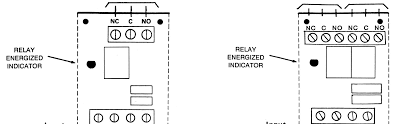
The MR101 Relay is a multi-voltage SPDT (Single Pole Double Throw) control relay designed for system interlocks. It connects fire alarm control panels, access control, and HVAC/BMS equipment with simple, repeatable wiring.
When one system raises a signal, the relay translates it into actionable switching logic for another. As a result, alarms, door releases, fan shutdowns, and elevator recall execute reliably and predictably.
External reference: Relay basics – Wikipedia
How It Works (SPDT & Multi-Voltage)
SPDT provides a Common terminal plus Normally Open (NO) and Normally Closed (NC) contacts. Therefore, the MR101 can simultaneously make one circuit while breaking another. This dual behavior is vital for life-safety sequences.
Key behavior
Key Applications
Across industries, the MR101 Relay guarantees interoperability and clear cause-and-effect.
Fire Alarm → Access Control
On alarm, the MR101 Relay releases electronic locks along egress paths. This allows safe evacuation while preserving security in restricted zones.
Related: Access Control Systems for Critical Facilities
Fire Alarm → BMS/HVAC
The relay commands fans to stop and dampers to close. Consequently, smoke spread through ducts is limited, improving tenability.
Related: HVAC Integration with Fire Safety Systems
Elevator Recall
During a fire, the MR101 Relay helps return cars to a designated floor and remove them from service. This aligns with code-driven recall logic and protects occupants.
External reference: NFPA 72 National Fire Alarm and Signaling Code
Compliance & Standards
The MR101 Relay supports adherence to international frameworks:
- NFPA 72 (US): Performance criteria for fire alarm and signaling systems.
- EN-54 (EU): Harmonized standards for fire detection and alarm.
- UL / FM: Third-party certifications that validate reliability under test.
While the relay itself is a switching device, its dependable operation helps turn panel logic into real-world actions required by codes.
External references:
CEN EN-54 Fire Detection ·
UL ·
FM Approvals
Technical Advantages
- Multi-voltage coil: Works with 12 VDC, 24 VDC, and 120 VAC signals.
- SPDT flexibility: NO/NC outputs cover most interlock scenarios.
- Status LED: Quick state verifica


