
Fill out the form below and we'll answer as soon as possible.
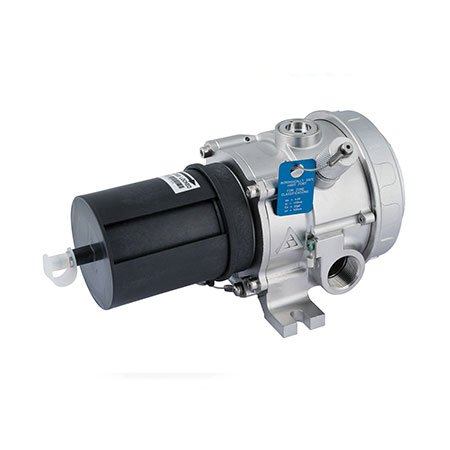
The PointWatch Eclipse Model PIRECL is Det-Tronics’ most rugged point infrared gas detector for continuous, fixed monitoring of flammable hydrocarbon gases in hazardous industrial environments. Built from 316 stainless steel with IP66/67 rating, it is designed to deliver reliable combustible gas detection from 0 to 100% LFL in conditions where electrochemical or catalytic bead sensors would degrade or fail.
The PIRECL uses infrared absorption technology — a non-depleting detection method that does not require the combustible gas to oxidise on a sensor element. This makes it immune to sensor poisoning from silicones, H2S, or chlorinated compounds, and eliminates the performance drift common in catalytic bead detectors over time.
Detection is factory-certified to methane, propane, ethylene, and butane, with sensitivity to a wide range of other flammable hydrocarbon vapours. Response time is as fast as 1.5 seconds to certified gases under FM, CSA, ATEX, and IECEx approval requirements. The heated sapphire optics combined with an optional weather baffle and hydrophobic filter significantly reduce nuisance faults caused by rain, condensation, and coastal humidity — a critical feature for offshore and outdoor installations.
A built-in tri-colour LED provides local visual indication of operating status, low alarm, high alarm, and fault without requiring an external display module. Routine recalibration is not required as part of normal operation, which substantially reduces ongoing maintenance costs compared to catalytic-type detectors.
Communication outputs cover the full range of industrial control system architectures: isolated 4-20 mA analogue, HART, and RS-485 Modbus as standard. Eagle Quantum Premier (EQP) models are available for native integration into Det-Tronics safety controllers, and an optional 2-alarm plus 1-fault relay package supports standalone life-safety executive control functions, certified to ANSI/ISA-12.13.01. INMETRO certification is also available, making the PIRECL one of the few detectors in its class fully compliant for globally industrial installations.
Certifications: FM, CSA, ATEX, IECEx, DNV/MED, INMETRO. Hazardous area ratings: Class I Division 1 (Groups B, C, D) and ATEX/IECEx Ex db eb. Operating temperature: –40°C to +75°C. Housing: 316 stainless steel. Input voltage: 18–32 Vdc.
Available from Blue BMS — supply only or fully integrated fire and gas detection system.
FAQ
The PIRECL is performance-certified to methane, propane, ethylene, and butane. It is also capable of detecting the majority of other flammable hydrocarbon vapours. Each unit is factory calibrated to one specific gas before shipment.
Routine recalibration is not required as part of normal preventive maintenance. The infrared detection principle is inherently stable and does not deplete over time, unlike catalytic bead sensors. Bump testing for functional verification is still recommended per your site safety management plan.
The PIRECL monitors continuously from 0 to 100% Lower Flammable Limit (LFL). Low and high alarm setpoints are configurable within that range (typically 10% LFL and 40–60% LFL respectively).
Response time to certified gases is as fast as 1.5 seconds under FM, CSA, ATEX, and IECEx test conditions — making it suitable for applications where rapid leak detection is operationally critical.
Standard outputs are isolated 4-20 mA, HART, and RS-485 Modbus. Optional outputs include an EQP interface for Det-Tronics safety controllers and a 2-alarm plus 1-fault relay package for standalone life-safety control.
What certifications does the PIRECL hold?
FM, CSA, ATEX, IECEx, DNV/MED, and INMETRO. It is rated for Class I Division 1 (Groups B, C, D) and ATEX/IECEx Ex db eb hazardous area classifications.
Yes. The IP66/67 stainless steel housing, heated sapphire optics, and optional weather baffle with hydrophobic filter make the PIRECL well-suited for outdoor, offshore, and coastal environments where condensation, rain, and salt spray are normal operating conditions.
What is the difference between the PIRECL and a catalytic bead detector?
Catalytic bead detectors degrade when exposed to silicones, H2S, lead compounds, or chlorinated gases — common contaminants in oil and gas and chemical processing environments. The PIRECL’s infrared technology is immune to these poisons, does not require the gas to combust on a sensor element, and maintains long-term accuracy without the drift that affects catalytic sensors over their service life.
Blue BMS supplies the Det-Tronics PointWatch Eclipse PIRECL for industrial projects globally — supply only. Contact Blue BMS to request a quote.